WHAT IT IS?
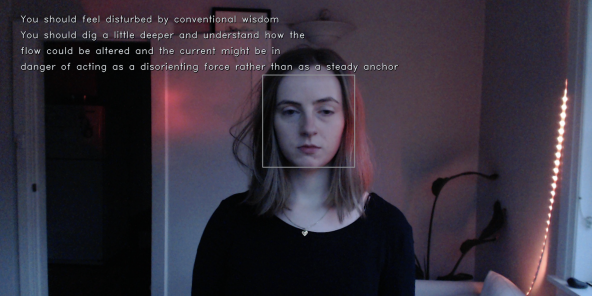
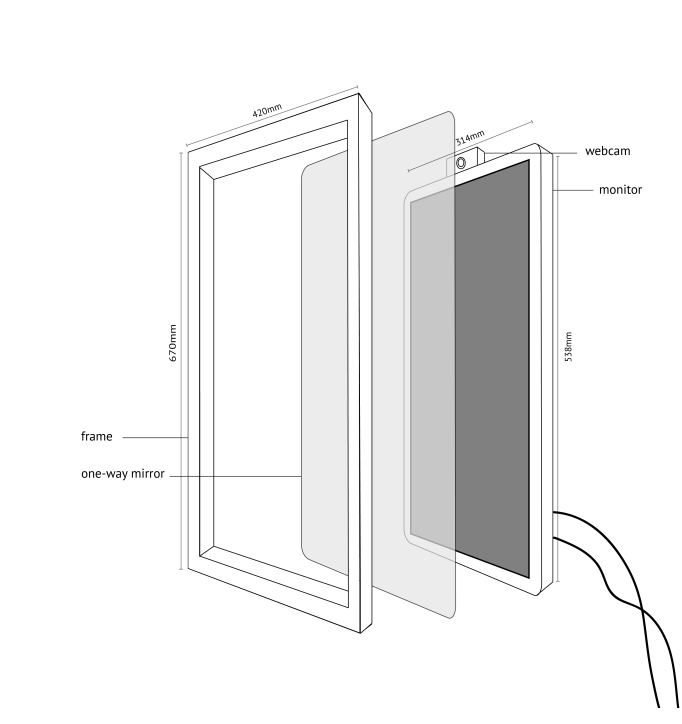
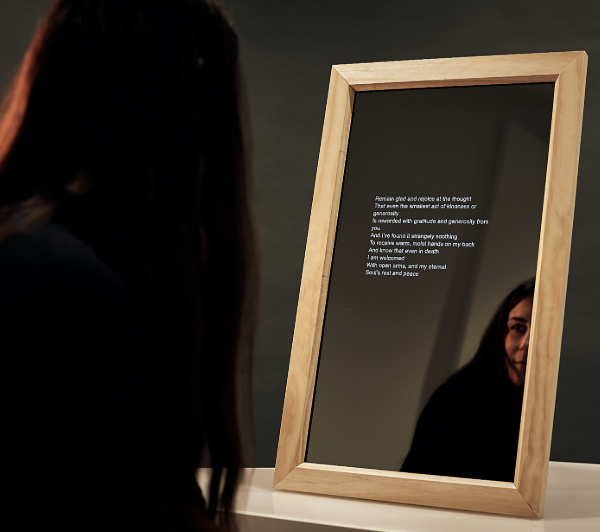
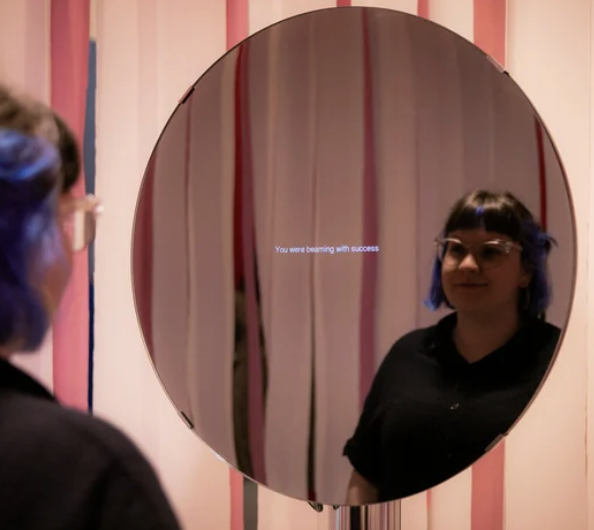
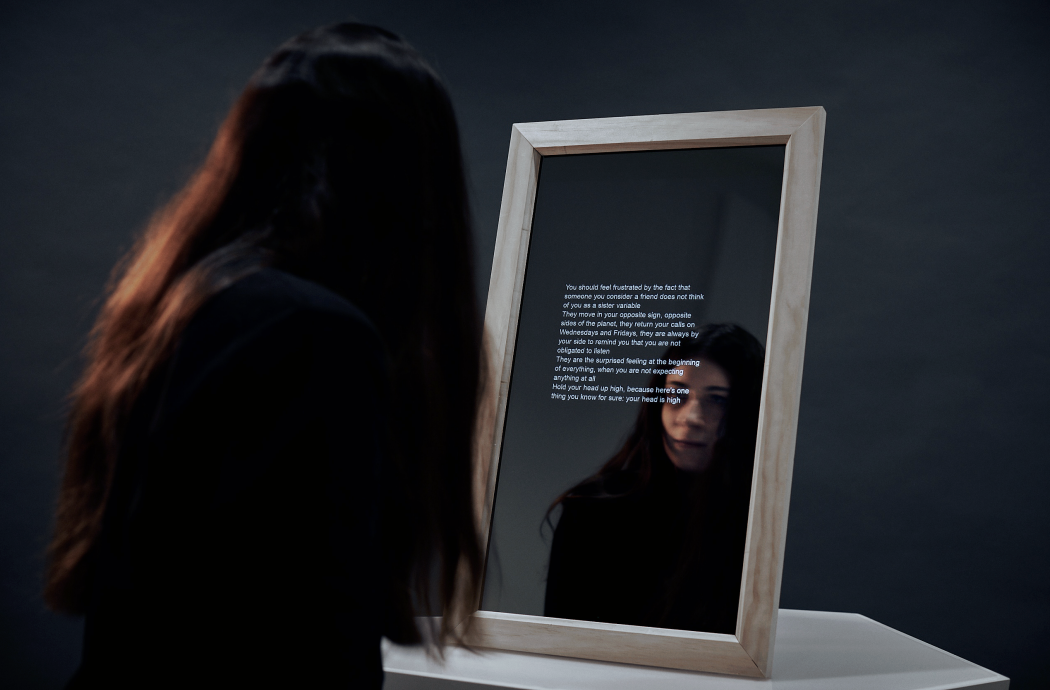
The Mirror Ritual is no ordinary mirror. It’s an interactive installation created at Monash University (Australia) in 2020 that combines AI and machine learning to read your facial expressions and generate, in real time, a personalized poem that reflects your emotional state.
It’s not about diagnosing, but about creating a poetic ritual: the machine interprets, you reinterpret, and together you build an emotional mirror.
WHY IT´S COOL?
Because it transforms something as intimate and fragile as an emotion into shareable art. Gen Z and Millennials, accustomed to Instagram and TikTok filters, find a different filter here: their own inner self.
Focusing on what these generations embrace today, it’s a concept:
- Instagrammable & TikTok famous → The experience of “looking at yourself and seeing your emotion transformed into a visual poem” is guaranteed viral content.
- It could be “Shiftwear” → Just as some shoes change design, this mirror changes every time you change: no two reflections are the same.
- Give me purpose → In the midst of the loneliness epidemic, where Gen Z reports feeling “alone together,” this mirror doesn’t judge: it recognizes you. It’s a ritual of emotional validation in times of empty hyperconnectivity.
WHY IT HAS FUTURE GROWTH POTENTIAL?
The hospitality of the future won’t just be comfortable beds or signature cocktails, but spaces that also nurture the emotional. The Mirror Ritual, an interactive mirror that transforms your emotions into poetry, has the potential to be integrated into hotels and hostels as an Emotional Check-In Mirror, into spas with personalized rituals, or even into cafes and airports as moments of poetic introspection. For Gen z and Millenials, who value purpose and authenticity, this type of experiences is golden: it combats silent loneliness, generates memories with meaning beyond aesthetics, and can be easily scaled to any space. In a world where likes don’t soothe isolation, this mirror proposes a revolution: emotional hospitality.
Sources:
https://researchmgt.monash.edu/ws/portalfiles/portal/302757900/302050997_oa.pdf


José Bonich Castaño
Alexa Alarcón Arratia
Science of the Time
Johanna Mau