WHAT IT IS?
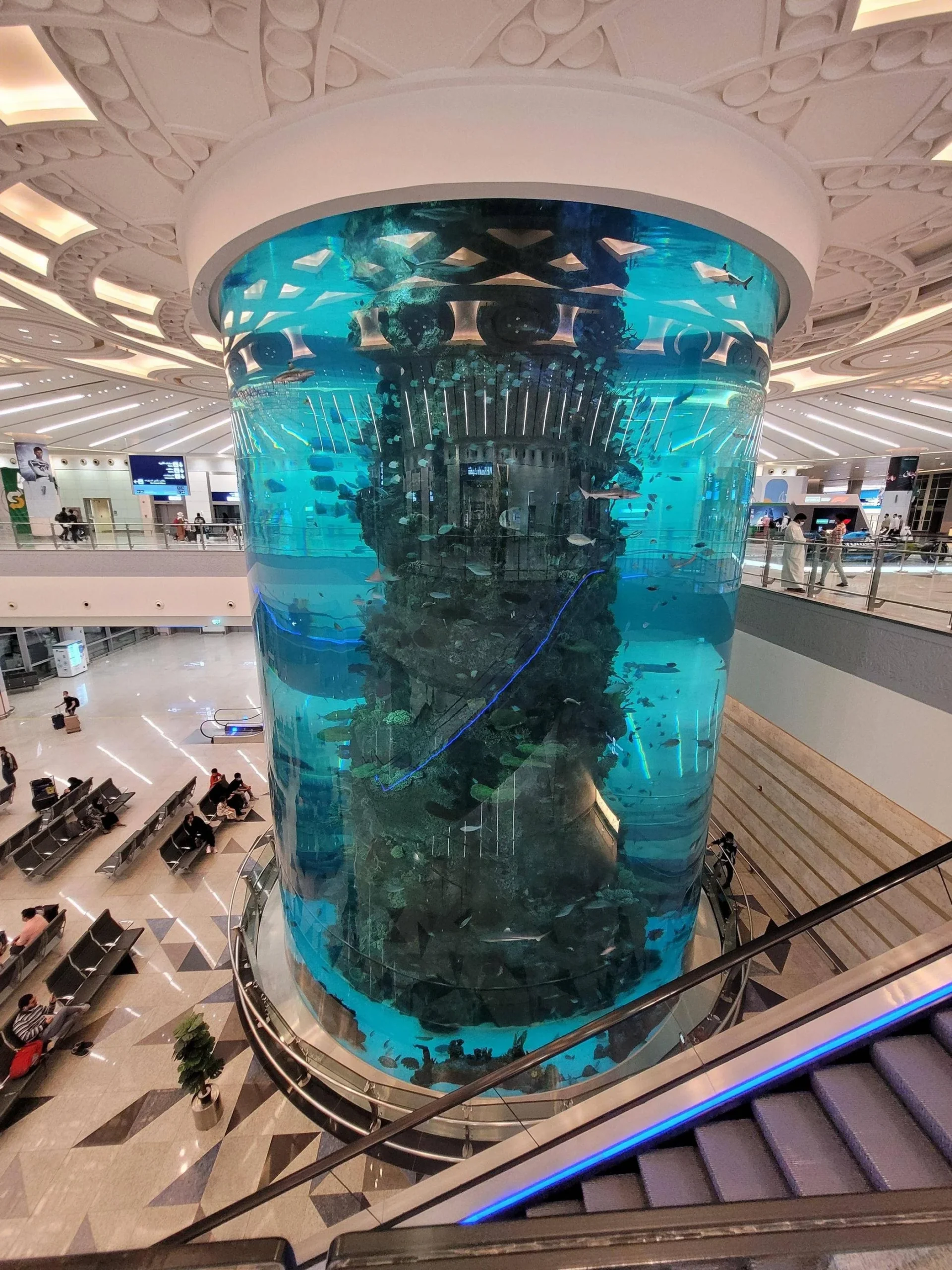
The aquarium is located inside King Abdulaziz International Airport (KAIA) in Jeddah, Saudi Arabia. It sits within the new passenger terminal, making it one of the most striking features passengers encounter upon arrival or transit.
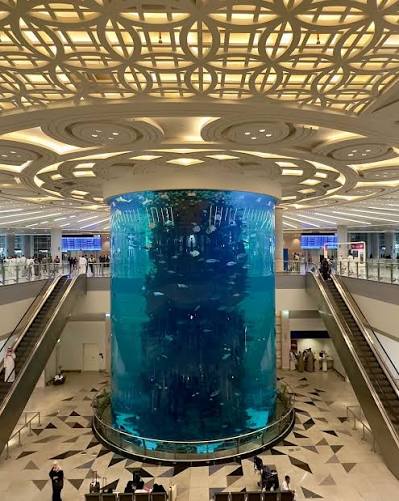
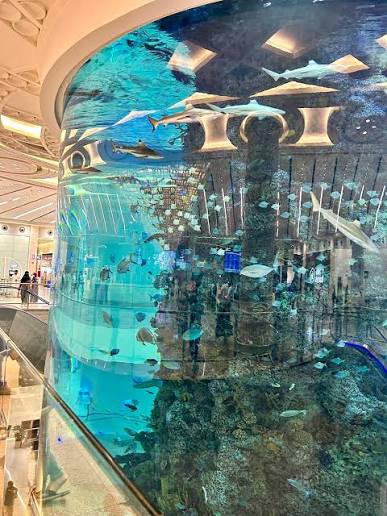
The aquarium was developed as part of the new airport terminal design — a modernization project to elevate Jeddah’s role as a global hub. It was built in collaboration with international design and construction experts specializing in large-scale aquariums. At 14 meters tall and holding about one million liters of water, it is considered the world’s largest airport aquarium. It houses more than 2,000 marine creatures, including species from the Red Sea, tying the airport’s story to Jeddah’s coastal identity.
WHY IT´S COOL?
Picture this: you arrive at King Abdulaziz International Airport in Jeddah, weary from your flight, your senses dulled by the hum of terminals and the rush of passengers. But then there it is, looming in glass and water: a 14‑meter tall cylindrical aquarium, its water shimmering, teeming with life, glowing softly in ambient light.
- Sensory magnet – A moment of calm in the transit chaos.
- Emotional anchor – You don’t merely see it; you feel it.
- Storytelling device – Red Sea, marine life, Jeddah’s identity.
- Instagram moment – A perfect travel memory to share.
- Hospitality leverage – A free gift to the traveler.
WHY IT HAS FUTURE GROWTH POTENTIAL?
First, it aligns seamlessly with Saudi Arabia’s Vision 2030. The aquarium isn’t just decoration; it’s a statement. It turns the airport — the Kingdom’s front door — into a destination in itself. It gives Jeddah a “wow factor” worthy of its Red Sea identity and helps position the city as a place travelers remember and talk about.
It also makes commercial sense. Airports today are more than transit spaces; they are marketplaces. A living aquarium of this scale naturally pulls people in — which means more traffic for shops and restaurants, more opportunities for events, for sponsorships, for branding that ties into Red Sea tourism or even luxury partnerships.
Then there’s education. This could grow beyond spectacle into something richer: interactive displays about marine life, VR journeys into the Red Sea, partnerships with schools or research institutes. From “look at this” to “learn from this.”
For passengers, the value is simple but profound. Every airport in the Gulf wants to be the preferred transit hub. Differentiation matters. A giant aquarium offers something Dubai, Doha, and Abu Dhabi don’t. It improves satisfaction scores, it softens the stress of travel, it makes people remember Jeddah.
And importantly, it carries the flag of sustainability. Advanced water recycling, artificial corals, conservation awareness — this aquarium is already an eco-showpiece. With further upgrades, it could become a platform for Saudi Arabia to showcase its commitment to the Red Sea’s future.
Finally, there’s scale. Once this concept proves itself, it doesn’t have to stop here. Miniature versions could appear in lounges, hotels, malls across the Kingdom. The Jeddah centerpiece could expand into guided tours, feeding shows, or even research tie-ins. The potential branches outward like coral itself


Luisa Fernanda Raigozo Rey
Science of the Time
Thanks. Carl
Salman Ali Baabdullah
Luis Sanchez Ibarra
Sheima El Boutaybi
Eva Jannat
Thaleia Bamiha
Diana Eid Dibos
Camila Altieri