







Indeed, embedding Biosensors into Interactive Smart Garments Proves That Emotional Clothing Externalizes Psychological Well-Being with Poetic Grace.
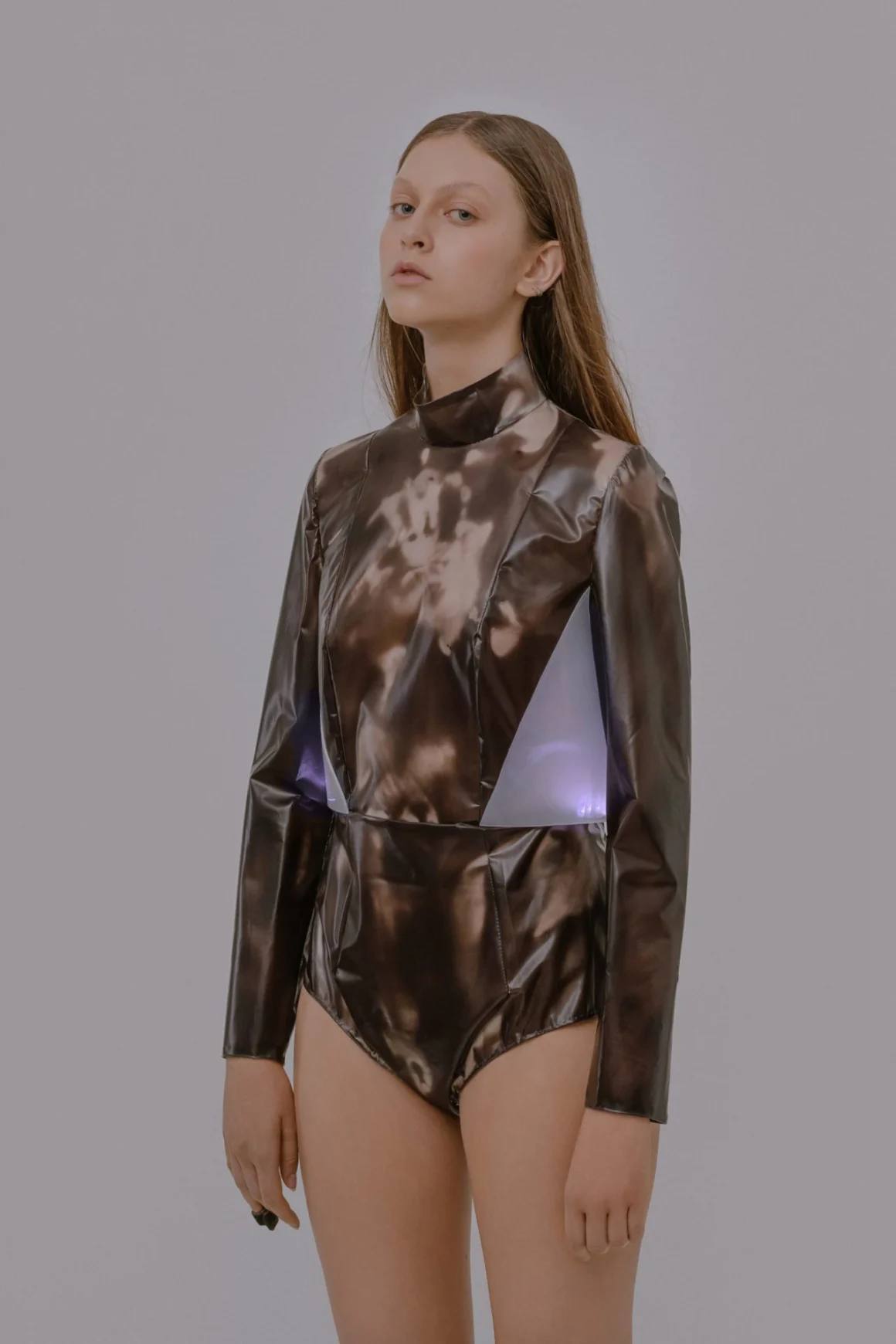
Fusing high-fashion tailoring with neuro-physiological monitoring, emotional clothing bio sensory fashion transforms human garments into empathetic mirrors of the mind. Specifically, Polish fashion researcher and speculative designer Iga Węglińska created reactive garments that respond dynamically to biometric stress signals. Consequently, wearers and observers witness real-time physiological shifts through color transitions and subtle light changes.
What Is Emotional Clothing Bio Sensory Fashion?
To begin with, standard fashion historically prioritized decorative aesthetics or utilitarian protection while ignoring the emotional life of the wearer. In contrast, Węglińska’s smart collection monitors heart rates and galvanic skin responses, translating emotional arousal into optical cues. In addition, When tension rises, thermo-chromic pigments and LED fibers shift from warm ambient tones into cool alerts.
Furthermore, this visual feedback loop encourages the wearer to practice conscious breathwork and somatic calming techniques. Meanwhile, interpersonal interactions become deeply honest, as externalizing vulnerability fosters compassion between friends. Therefore, wearable design becomes a sophisticated instrument for mindfulness and somatic self-awareness.
Why Is This Bio-Sensory Fashion Cool?
- Real-Time Stress Biofeedback: Wearers notice subtle physical tension before conscious anxiety escalates. Similar to deliberate Japanese craftsmanship, delicate sensitivity fosters harmonious presence.
- Destigmatizing Human Vulnerability: Making emotions visible normalizes psychological dialogue in everyday environments.
- Innovative Material Synthesis: In fact, conductible threads, smart hydrogels, and soft neoprene unite seamlessly.
- Therapeutic Mind-Body Integration: Garments prompt wearers to breathe, slow down, and regulate their nervous systems.
Why Does Emotionally Responsive Tech Have Growth Potential?
Moreover, Modern consumers gravitate toward wearable wellness technology that monitors stress levels, mental clarity, and somatic balance. Because smart textiles eliminate rigid plastic wrist trackers in favor of soft, elegant apparel, the neuro-adaptive fashion market expands rapidly. Therefore, emotionally reactive garments will redefine the next era of personal health apparel.
The Take Away
In conclusion, Emotional Clothing proves that garments can connect us more deeply to our inner worlds. When technology honors emotional truth, fashion becomes truly healing. Ultimately, Wear your feelings with pride, and let your body speak its truth with grace.
Reference Link: Iga Węglińska Design Studio
34 comments
Isabeau! Thanks for your Cool & persistent contributions. Always a good and thorough read. The Emotional Clothing collection. Will be a growing market for it. But, I gather not for all all the time. There will be many occasions I don’t want to show what my emotions are – especially when I am not in control what I show. Maybe there will be some very, very interested target groups – people with diseases, for instance. I thank you, my dear. Carl
Keeping the workshop, sensor collection and therapeutic proposal separate would preserve the contribution of each. The workshops can be valued as participatory exploration without being used to validate health claims made about other garments or to imply a shared level of evidence.
“These emotional clothing pieces become a representation of self-expression and understanding.” This reminded me of the Alte movement, where people seek unique styles and express themselves with. Very Cool blog Isabeau, thanks for sharing
Great idea, it may take time to be used/adopted by society though.
HOW COOL IS THIS “SEED”?
● ● ● ● ○
DOES IT HAVE FUTURE GROWTH POTENTIAL?
● ● ● ● ○
The ethical question is who controls the information expressed through the garment. Bodily measurements should not automatically become a public account of emotion. The wearer needs meaningful choice over visibility and interpretation, especially if others might treat a design response as an authoritative description of their state.
Control should extend from measurement to visibility and interpretation. Explaining the signal path would help, but the wearer also needs the freedom to stop or conceal the response, especially where observers might assume the output describes a particular emotion accurately.
HOW COOL IS THIS “SEED”?
● ● ● ● ○
DOES IT HAVE FUTURE GROWTH POTENTIAL?
● ● ● ● ○
The cultural signal is clothing moving from representing an identity to responding visibly during use. That changes the relationship between wearer, object and observer. The idea is compelling without assuming the response reveals an unfiltered emotional truth or that greater visibility is always desirable.
HOW COOL IS THIS “SEED”?
● ● ● ● ○
DOES IT HAVE FUTURE GROWTH POTENTIAL?
● ● ● ● ○
A garment might invite someone to notice their experience, but it should not demand an explanation to everyone nearby. I would value a design that supports a private moment of reflection. Care includes allowing the wearer to keep uncertainty and emotion to themselves.
HOW COOL IS THIS “SEED”?
● ● ● ● ○
DOES IT HAVE FUTURE GROWTH POTENTIAL?
● ● ● ● ○
There is something intimate about clothing that changes while being worn. Yet the visible response may not match the words a person would choose for their feelings. I would preserve that ambiguity rather than turn the garment into a label that speaks on the wearer’s behalf.
HOW COOL IS THIS “SEED”?
● ● ● ● ○
DOES IT HAVE FUTURE GROWTH POTENTIAL?
● ● ● ● ○
People demonstrating the garments need clear limits on their explanations. They should distinguish measured signals, design responses and claims that still need evaluation. Training would help prevent a visitor’s interest in the prototype from becoming an improvised assessment of stress or a recommendation about treatment.
HOW COOL IS THIS “SEED”?
● ● ● ● ○
DOES IT HAVE FUTURE GROWTH POTENTIAL?
● ● ● ● ●
The participatory workshops offer a different kind of value from the sensor-based garments. People can explore what clothing means through their own stories. I would include those voices in the discussion without treating creative expression as evidence that every technical or therapeutic proposal in the article works.
HOW COOL IS THIS “SEED”?
● ● ● ● ○
DOES IT HAVE FUTURE GROWTH POTENTIAL?
● ● ● ○ ○
The combination of textiles, electronics and specialised materials raises questions about repair and end-of-use handling. An emotionally engaging design does not establish responsible material practice. I would ask how the parts can be maintained or separated before extending the project’s expressive ambition into a sustainability claim.
HOW COOL IS THIS “SEED”?
● ● ● ● ●
DOES IT HAVE FUTURE GROWTH POTENTIAL?
● ● ● ● ○
An object intended to invite attention can also create another signal a person feels obliged to monitor. The interaction should be tested in everyday routines. I would ask whether the garment helps the wearer reflect comfortably or adds an interpretation task that interrupts what they are trying to do.
HOW COOL IS THIS “SEED”?
● ● ● ● ○
DOES IT HAVE FUTURE GROWTH POTENTIAL?
● ● ● ● ○
The changing form and visible effects make the garments distinctive as expressive objects. Their desirability still depends on the wearer’s comfort with that exposure. A striking appearance should not imply that displaying bodily signals is a more advanced or authentic way to present oneself.
HOW COOL IS THIS “SEED”?
● ● ● ● ○
DOES IT HAVE FUTURE GROWTH POTENTIAL?
● ● ● ● ○
A private setting might allow someone to explore the garment without turning the experience into public performance. The offer should explain the object’s purpose and limits clearly. Personalisation would mean respecting what the wearer wants to keep private, not displaying more information as a premium feature.
HOW COOL IS THIS “SEED”?
● ● ● ● ○
DOES IT HAVE FUTURE GROWTH POTENTIAL?
● ● ● ● ○
The article’s intentions around stress and trauma should be distinguished from demonstrated clinical outcomes. A prototype may invite bodily awareness without being a validated treatment. I would discuss the design experience and avoid presenting either garment approach as a substitute for qualified personal care.
HOW COOL IS THIS “SEED”?
● ● ● ● ○
DOES IT HAVE FUTURE GROWTH POTENTIAL?
● ● ● ● ○
The interface should make clear which signals are being measured and how they produce the visible response. Users also need control over any storage or sharing. A bodily measurement should not be presented as an infallible reading of emotion simply because the output is immediate and visually persuasive.
HOW COOL IS THIS “SEED”?
● ● ● ● ●
DOES IT HAVE FUTURE GROWTH POTENTIAL?
● ● ● ● ○
The article’s workshop examples show how a familiar object can open a conversation about personal experience. That principle could inform thoughtful hosting without requiring a technical garment. I would keep the conversation voluntary and avoid asking people to disclose feelings merely because a design activity makes them visible.
HOW COOL IS THIS “SEED”?
● ● ● ● ○
DOES IT HAVE FUTURE GROWTH POTENTIAL?
● ● ● ● ○
The garment becomes an active interface rather than a static surface. Its construction has to support movement, care and understandable feedback as well as the visual idea. I would evaluate how those functions hold together during use, not only how the prototype appears in a demonstration.
HOW COOL IS THIS “SEED”?
● ● ● ● ○
DOES IT HAVE FUTURE GROWTH POTENTIAL?
● ● ● ○ ○
People should be able to choose how they participate and what they disclose. A design that assumes everyone wants public emotional expression may exclude some wearers. Clear alternatives and adaptable interaction would make the exploration more welcoming without requiring a single way of responding to bodily signals.
HOW COOL IS THIS “SEED”?
● ● ● ● ●
DOES IT HAVE FUTURE GROWTH POTENTIAL?
● ● ● ● ○
The reported experiments and therapeutic intentions do not establish treatment efficacy. Bodily signals also should not be equated automatically with a specific emotion. I would keep the description at the level of experimental design and require appropriate evidence before making claims about anxiety, trauma recovery or clinical benefit.
HOW COOL IS THIS “SEED”?
● ● ● ● ○
DOES IT HAVE FUTURE GROWTH POTENTIAL?
● ● ● ● ○
A restrained signal may invite attention more gently than a garment that continually announces changes to others. I would let the wearer control the interaction. The design’s expressive power could come from a subtle, personal encounter rather than an expectation that every internal change becomes a public display.
HOW COOL IS THIS “SEED”?
● ● ● ● ●
DOES IT HAVE FUTURE GROWTH POTENTIAL?
● ● ● ● ○
Communication should distinguish the collection’s intended effects from results that have actually been demonstrated. The different projects in the article need separate descriptions. Clear language about research, prototypes and workshops would make the story more credible than treating all of them as evidence of a new therapeutic product category.
HOW COOL IS THIS “SEED”?
● ● ● ● ○
DOES IT HAVE FUTURE GROWTH POTENTIAL?
● ● ● ● ●
The promise of visible emotional truth risks making private experience available for others to judge. I would ask who benefits from that visibility and who decides its meaning. A garment can be an interesting experiment without granting observers authority to read or correct the person wearing it.
HOW COOL IS THIS “SEED”?
● ● ● ● ●
DOES IT HAVE FUTURE GROWTH POTENTIAL?
● ● ● ● ○
The project brings demanding textile and technical details into an intimate object. Its craft should be judged through wearability, maintainability and coherent interaction. I would examine how the garment works over repeated use rather than allow a striking response to stand in for the quality of the whole construction.
HOW COOL IS THIS “SEED”?
● ● ● ● ●
DOES IT HAVE FUTURE GROWTH POTENTIAL?
● ● ● ○ ○
An exhibition or demonstration space should give wearers control over proximity and observation. The garment’s visible response may attract attention they did not anticipate. I would plan the encounter so someone can explore privately or step away, rather than make public display the only way to experience the design.
HOW COOL IS THIS “SEED”?
● ● ● ● ○
DOES IT HAVE FUTURE GROWTH POTENTIAL?
● ● ○ ○ ○
The emotional promise should be an opportunity for exploration, not a claim that the garment knows the wearer better than they know themselves. Trust comes from clear limits and personal control. A meaningful encounter allows people to interpret their experience without pressure to accept the object’s response as a verdict.
HOW COOL IS THIS “SEED”?
● ● ● ● ○
DOES IT HAVE FUTURE GROWTH POTENTIAL?
● ● ● ● ○
The garments create an interesting proposition around interaction with clothing, but a commercial offer needs a clear intended use. I would separate expressive design from therapeutic claims. Customers should understand whether they are buying an experimental object, a wearable interface or a product with demonstrated benefits.
Well written and documented Isabeau! Because of the way you have explained it to us, I see the coolness and growth potential. Normally I would not have considered it to be cool or have growth potential. It’s the argumentation that made this post valuable and understandable. Keep up the good work!
HOW COOL IS THIS “SEED”?
● ● ● ● ●
DOES IT HAVE FUTURE GROWTH POTENTIAL?
● ● ● ● ○
A visible change in clothing may be interpreted differently by the wearer and the people around them. The design should not assume a shared emotional code. I would let users decide what they wish to communicate, rather than ask observers to infer someone’s feelings from a garment signal.
HOW COOL IS THIS “SEED”?
● ● ● ● ●
DOES IT HAVE FUTURE GROWTH POTENTIAL?
● ● ● ● ●
The collection could be compelling in a design exhibition where visitors can examine its intentions and limits. That setting is different from everyday use or a hospitality service. I would evaluate the specific application before treating a promising research object as ready for a broad customer offer.
I find it intriguing, but I’m not sure I’d want to wear it. My mental health/anxiety is a sensitive aspect of me, and I’d rather hide about how I’m feeling at the time than reveal it to others.
HOW COOL IS THIS “SEED”?
● ● ● ● ●
DOES IT HAVE FUTURE GROWTH POTENTIAL?
● ● ● ● ○
A wearable system introduces practical responsibilities around fitting, care and technical faults. Anyone supporting it needs clear information about what the garment can indicate. I would avoid placing it in a service setting where staff are expected to interpret a guest’s emotional state from visible effects.
HOW COOL IS THIS “SEED”?
● ● ● ● ○
DOES IT HAVE FUTURE GROWTH POTENTIAL?
● ● ● ● ○
The proposition combines specialised materials and ongoing use requirements, so costs extend beyond making a striking prototype. I would ask about durability, maintenance and evidence of demand. An interesting demonstration does not establish that a reliable, supported product can be offered at a sustainable price.
Rate & Discuss this Signal
Calibrate the Future Signals Index with your rating below, and share your perspective in the community dialogue.
Evaluate this Creative Signal
Help calibrate the Future Signals Index. Rate this Seed on both key criteria below (scale: 2 to 10).