






Take Away
Hotels for Trees connects a guest's decision to skip daily room cleaning with funding for tree planting. Consequently, a door hanger starts the process, while hotel reporting makes participation visible. The interesting shift is from quietly accepting less service to choosing a specific contribution.
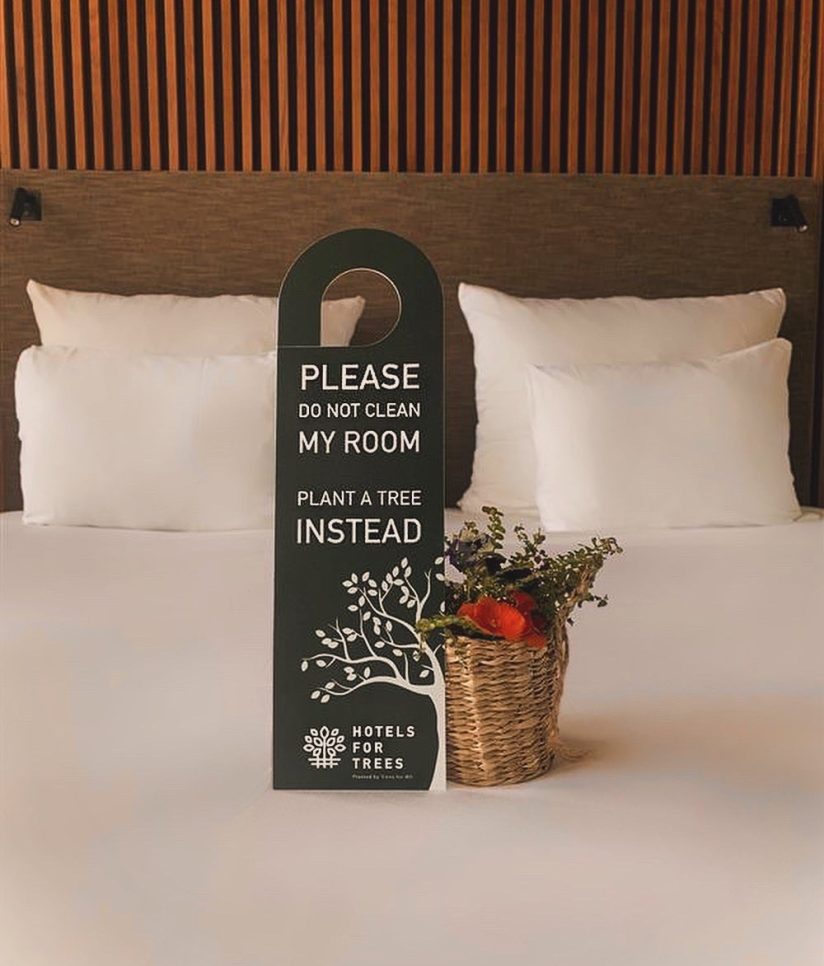
A Hotels for Trees door hanger presents the option to skip daily room cleaning · Credit: Science of the Time archive · Image source
What Is It? Hotels for Trees Explained
The non-profit foundation began in the Netherlands in 2021. Specifically, during a multi-night stay at a participating hotel, guests can hang its dedicated sign outside their room. Housekeeping then skips that day's clean and the hotel records the choice in an online portal.
In addition, the foundation describes monthly invoicing and corresponding tree planting through its partners. Meanwhile, its website displays participation by hotel and day. This gives the action an identifiable route from a bedroom door to a wider programme.
However, a portal entry should not imply that a tree instantly appears in the ground. In fact, the visible record, financial contribution and planting project belong to different stages. Therefore, keeping those stages clear makes the simple promise easier to understand without overstating what the guest can verify immediately.
Source: Official process
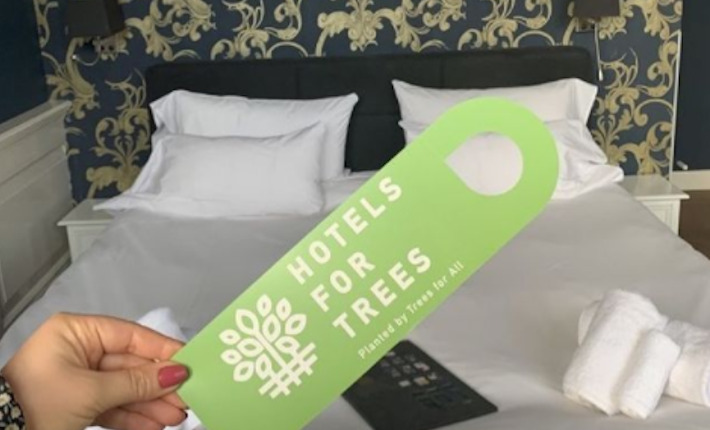
The programme's green door hanger connects a room-service decision with tree planting · Credit: Science of the Time archive · Image source
Why Is Hotels for Trees Cool?
In fact, many hotel sustainability requests ask guests to give something up without showing what follows. The Hotels for Trees sign gives that decision a concrete destination. Because the guest chooses at the point of service, participation fits a familiar routine.
Furthermore, a smaller service can feel like a meaningful choice when the guest can see what happens because of it.
This matters in hospitality, where constant replenishment can stand for care. A voluntary skipped clean introduces another possibility: care may include respecting a guest's wish to leave the room undisturbed. At the same time, a stated contribution gives that preference a purpose beyond convenience.
However, the invitation must remain voluntary. Guests who need cleaning should still receive a welcoming response. Otherwise, a contribution could become pressure to accept reduced service, and the apparent generosity would lose credibility.
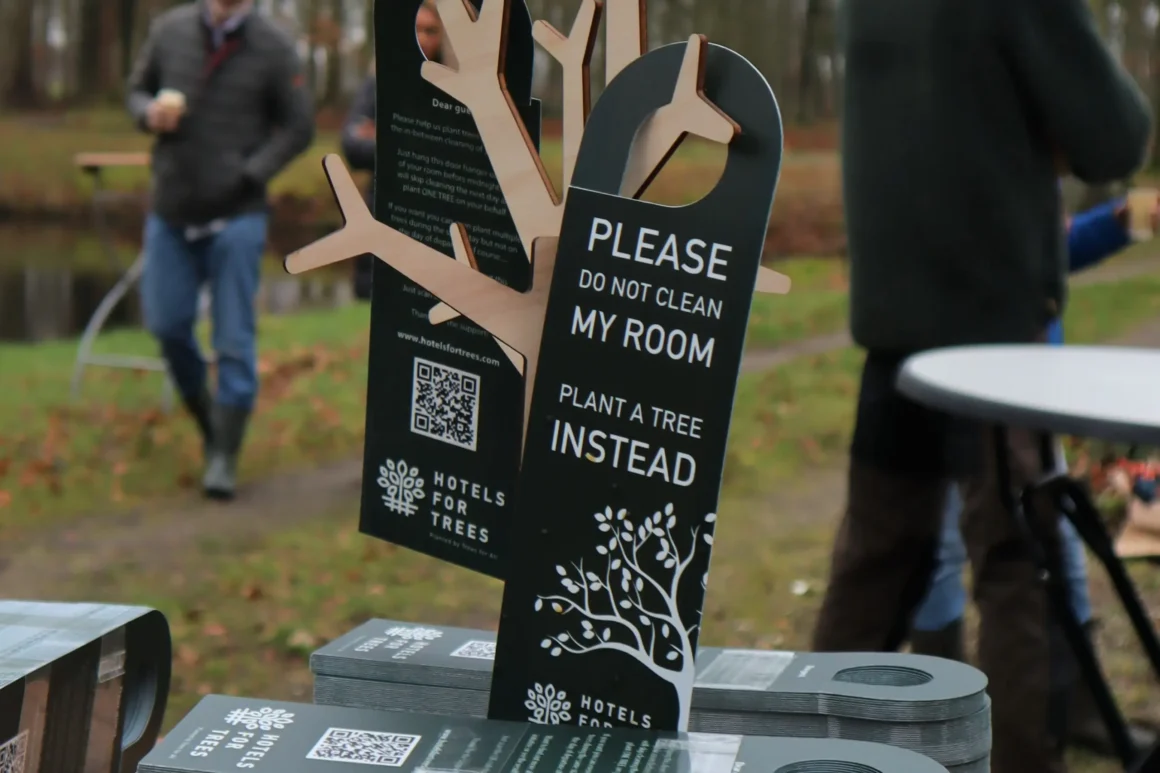
A tree-shaped programme display makes the invitation visible outside the guest room · Credit: Science of the Time archive · Image source
Why Does Hotels for Trees Have Future Growth Potential?
The mechanism can work across hotel categories because it starts with an existing housekeeping decision. In addition, a property does not need an elaborate new guest facility. Instead, staff need a clear process for recording choices and explaining what the contribution supports.
The foundation reports expansion beyond the Netherlands, including North America and Australia. That suggests the operating method can travel. However, participation figures alone cannot establish guest satisfaction, forest survival or the environmental performance of a whole stay.
For future operators, the useful questions are practical. For instance, can guests find their hotel’s record? Is information about planting partners and reporting easy to find? Moreover, do housekeeping teams know how to distinguish a voluntary choice from a missed service? Clear answers would make the programme more trustworthy.
The same design logic could inform other optional services, provided the promised outcome remains specific and accountable. However, tree planting should not serve as permission to ignore energy use or other hotel impacts. The opportunity lies in a credible contribution that complements wider operational work.
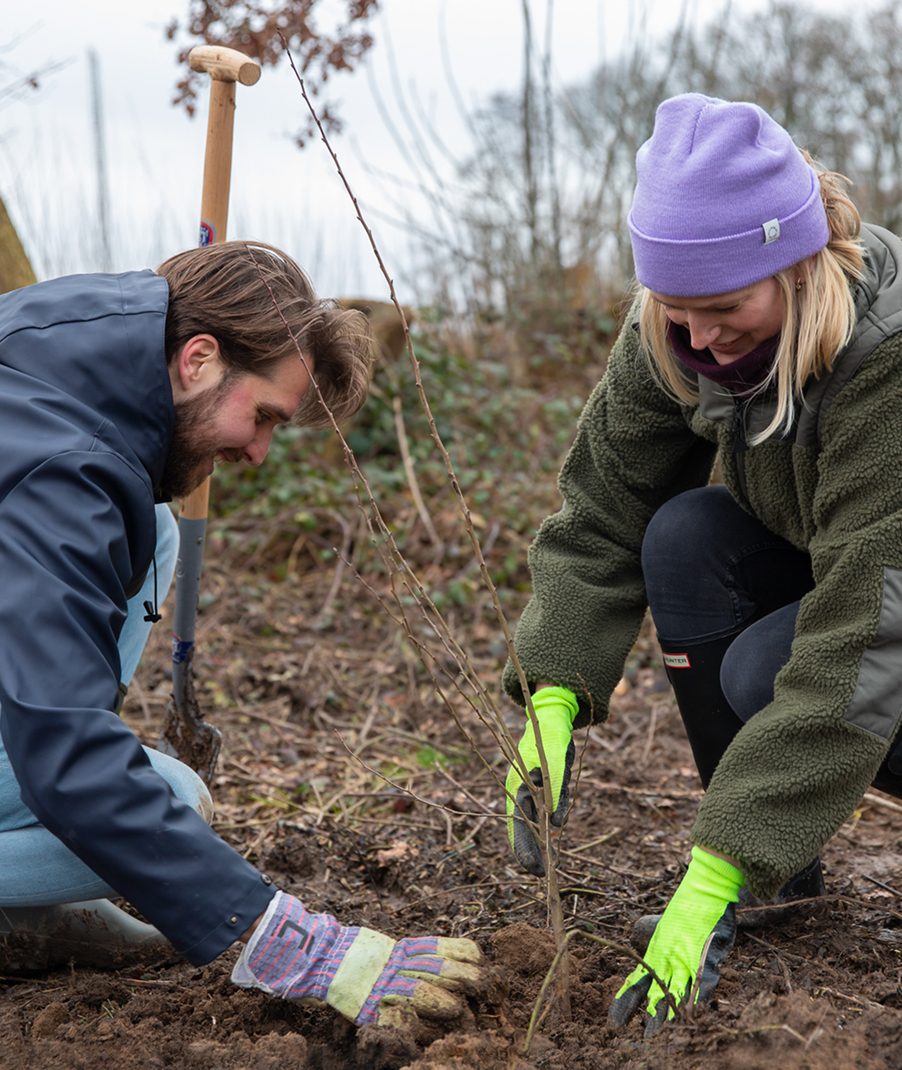
Tree planting shown on the programme website connects participation with work beyond the hotel · Credit: Hotels for Trees · Image source
Trend Summary Insight
Hotels for Trees turns a routine service decision into a visible contribution. Its broader lesson is that optional restraint becomes more persuasive when guests retain a choice and can understand the process behind the promise.

A newly planted site shown in programme reporting. This is not an individually identified guest tree · Credit: Hotels for Trees · Image source
Related signal: Bang Bang Bangkok: dinner or trip?
30 comments
HOW COOL IS THIS “SEED”?
● ● ● ● ●
DOES IT HAVE FUTURE GROWTH POTENTIAL?
● ● ● ● ●
The offer connects a service decision with a visible account of contribution. Its commercial value depends on trust and delivery. I would assess participation and guest response separately from the promotional appeal of having a straightforward message about responsible hospitality.
HOW COOL IS THIS “SEED”?
● ● ● ● ●
DOES IT HAVE FUTURE GROWTH POTENTIAL?
● ● ● ● ●
A guest who changes their mind should receive the same warm response as someone who participates. The team can keep the choice clear without making it moral pressure. Good service lets the initiative remain voluntary in ordinary practice, not only in the original explanation.
HOW COOL IS THIS “SEED”?
● ● ● ● ○
DOES IT HAVE FUTURE GROWTH POTENTIAL?
● ● ● ● ○
Savings and contributions need a transparent operating account. The assessment should include what changes in labour, supplies and the actual funding process. A simple guest message can be useful while the economic and environmental results remain more complex than a single headline exchange.
HOW COOL IS THIS “SEED”?
● ● ● ● ●
DOES IT HAVE FUTURE GROWTH POTENTIAL?
● ● ● ● ●
The planting relationship should be visible enough to understand who benefits and who carries out the work. A contribution can have purpose beyond the hotel stay. Its credibility grows when communities and long-term care are part of the account rather than only the initial planting count.
HOW COOL IS THIS “SEED”?
● ● ● ● ●
DOES IT HAVE FUTURE GROWTH POTENTIAL?
● ● ● ● ●
The guest can make an ordinary decision feel connected to something beyond the room. That meaning should remain specific rather than exaggerated. A modest clearly explained contribution may be more trustworthy than presenting the choice as proof that the entire visit has become environmentally positive.
HOW COOL IS THIS “SEED”?
● ● ● ● ●
DOES IT HAVE FUTURE GROWTH POTENTIAL?
● ● ● ● ○
The initiative should not make a guest feel guilty for requesting normal service. A warm response when needs change protects the relationship. The host can explain the purpose while recognising that participation must remain a comfortable choice for the individual person.
HOW COOL IS THIS “SEED”?
● ● ● ● ●
DOES IT HAVE FUTURE GROWTH POTENTIAL?
● ● ● ● ●
A small decision can feel meaningful when its connection to the outcome is clear. I would want to understand what happens after the initial promise. A continuing account of care could give the gesture more emotional substance than a celebratory message that ends at planting.
HOW COOL IS THIS “SEED”?
● ● ● ● ●
DOES IT HAVE FUTURE GROWTH POTENTIAL?
● ● ● ● ●
Housekeeping and reception need the same clear record of the guest’s choice. Miscommunication can undermine both service and trust. The team should know how to handle partial requests or a changed preference rather than leave each employee to improvise a different interpretation.
A changed request should be easy for both teams to recognise. That consistency keeps the choice voluntary in practice and avoids making the guest explain or defend their needs repeatedly.
HOW COOL IS THIS “SEED”?
● ● ● ● ●
DOES IT HAVE FUTURE GROWTH POTENTIAL?
● ● ● ● ●
The visible guest gesture can dominate the story while the workers and planting partners remain unseen. Their contribution deserves attention too. A responsible account should explain how the change affects everyday work rather than present the initiative mainly as a convenient personal achievement for visitors.
HOW COOL IS THIS “SEED”?
● ● ● ● ●
DOES IT HAVE FUTURE GROWTH POTENTIAL?
● ● ● ● ●
Planting is the beginning of a living process, not its complete result. The programme should explain sites, appropriate species and continuing care through its partners. That information helps the guest understand the contribution without treating every counted tree as an interchangeable environmental unit.
HOW COOL IS THIS “SEED”?
● ● ● ● ●
DOES IT HAVE FUTURE GROWTH POTENTIAL?
● ● ● ● ●
The choice should take little effort and be easy to reverse. Guests need a clear route to request what they still require. A useful voluntary initiative becomes less convenient if someone spends more time clarifying ordinary service than they would have under the original routine.
HOW COOL IS THIS “SEED”?
● ● ● ● ○
DOES IT HAVE FUTURE GROWTH POTENTIAL?
● ● ● ● ○
Participation can become a quiet value signal rather than another premium amenity. Its private meaning deserves attention beside any public recognition. I would ask whether guests understand and trust the outcome, not only whether they enjoy displaying that they made a responsible choice.
HOW COOL IS THIS “SEED”?
● ● ● ● ○
DOES IT HAVE FUTURE GROWTH POTENTIAL?
● ● ● ● ●
A private property can adapt the offer to its actual service pattern, but the contribution needs a clear agreement. The guest should receive a precise explanation. A hospitality partner should not attach a broad environmental story to a routine change without showing what is funded and delivered.
HOW COOL IS THIS “SEED”?
● ● ● ● ○
DOES IT HAVE FUTURE GROWTH POTENTIAL?
● ● ● ● ●
Some guests may appreciate fewer room interruptions, while others want regular service. The initiative should make room for both preferences. It can be meaningful without implying that participation makes the person more thoughtful or creates a universal sense of wellbeing.
HOW COOL IS THIS “SEED”?
● ● ● ● ●
DOES IT HAVE FUTURE GROWTH POTENTIAL?
● ● ● ● ●
Digital tracking can make the relationship easier to inspect after departure. The record needs to explain what is counted and when. A simple interface should help guests understand the contribution rather than turn an estimate or commitment into an apparently completed ecological outcome.
The record could show the stages rather than only one total. Funding, planting and continuing care are related, but separating them would help guests understand what has actually happened.
HOW COOL IS THIS “SEED”?
● ● ● ● ●
DOES IT HAVE FUTURE GROWTH POTENTIAL?
● ● ● ● ●
The principle could influence other hospitality routines, but each needs its own evidence of savings and benefit. A familiar exchange should not be copied automatically. The operation must understand what it actually reduces and how that supports a separate outcome without compromising the guest’s experience.
HOW COOL IS THIS “SEED”?
● ● ● ● ●
DOES IT HAVE FUTURE GROWTH POTENTIAL?
● ● ● ● ●
The physical signal needs to be legible and easy for guests and staff to use. A small object can carry a clear decision when its meaning is consistent. Good design should prevent ambiguity rather than rely on a long explanation beside an ordinary room-service routine.
HOW COOL IS THIS “SEED”?
● ● ● ● ○
DOES IT HAVE FUTURE GROWTH POTENTIAL?
● ● ● ● ○
The experience extends beyond departure through a contribution the guest can revisit. That continuity is appealing when the record remains specific. A host should explain what the person has supported without implying a private relationship with an individual tree that the programme has not actually established.
HOW COOL IS THIS “SEED”?
● ● ● ● ●
DOES IT HAVE FUTURE GROWTH POTENTIAL?
● ● ● ● ●
A guest’s practical room needs should remain central to service decisions. The environmental invitation should not be presented as universally appropriate for every stay. People need to understand available choices and support without feeling that requesting ordinary care undermines the purpose of the initiative.
HOW COOL IS THIS “SEED”?
● ● ● ● ●
DOES IT HAVE FUTURE GROWTH POTENTIAL?
● ● ● ● ●
Fewer unnecessary interventions can make a stay feel more considered. The change should remain quiet and functional rather than require repeated celebration. A clear choice and a trustworthy account of the contribution are more persuasive than excessive branded messaging about the guest’s virtue.
HOW COOL IS THIS “SEED”?
● ● ● ● ●
DOES IT HAVE FUTURE GROWTH POTENTIAL?
● ● ● ● ●
The simple message may spread quickly, while continued trust depends on the information behind it. Guests should be able to inspect the outcome without specialist knowledge. Clear distinctions between planned, funded and completed work would help the digital story remain accurate.
HOW COOL IS THIS “SEED”?
● ● ● ● ○
DOES IT HAVE FUTURE GROWTH POTENTIAL?
● ● ● ● ●
The initiative should not use tree planting to make the rest of the operation disappear from scrutiny. Labour and resource changes deserve attention as well. A credible programme can report a specific benefit without presenting one skipped service as proof of a climate-positive stay.
HOW COOL IS THIS “SEED”?
● ● ● ● ○
DOES IT HAVE FUTURE GROWTH POTENTIAL?
● ● ● ● ●
Responsible hospitality can become distinctive through a practical choice rather than another visible object. The claim needs clarity and proportion. A modest contribution honestly described carries more authority than an elaborate premium narrative that asks the guest to overlook the limits of the result.
HOW COOL IS THIS “SEED”?
● ● ● ● ●
DOES IT HAVE FUTURE GROWTH POTENTIAL?
● ● ● ● ○
The decision needs to move reliably from the room threshold into the service team’s work. Clear physical information and operational communication matter together. A guest should not have to manage repeated explanations because the visible signal and the actual service process do not align.
HOW COOL IS THIS “SEED”?
● ● ● ● ○
DOES IT HAVE FUTURE GROWTH POTENTIAL?
● ● ● ● ○
The emotional value comes from a choice connected to a credible outcome. Good hosting keeps that relationship voluntary and understandable. A guest should feel informed and supported whether they participate or request the normal service their particular stay needs.
This works because the sustainable choice is immediate, understandable and voluntary. Guests can see the trade: less housekeeping here, more trees there. The next evolution could show verified local impact after the stay, turning a one-night decision into a longer relationship with restoration.
HOW COOL IS THIS “SEED”?
● ● ● ● ●
DOES IT HAVE FUTURE GROWTH POTENTIAL?
● ● ● ● ●
The choice becomes useful when the guest understands it quickly and remains comfortable afterwards. The hotel should assess actual participation and service satisfaction together. A clear environmental offer ought not to create an awkward process for someone whose room needs attention later.
HOW COOL IS THIS “SEED”?
● ● ● ● ●
DOES IT HAVE FUTURE GROWTH POTENTIAL?
● ● ● ● ○
The introduction needs to be simple across languages and supported by consistent staff understanding. Guests should know how to change their choice. A one-day preference should not silently become a fixed arrangement for the rest of the stay.
Rate & Discuss this Signal
Calibrate the Future Signals Index with your rating below, and share your perspective in the community dialogue.
Evaluate this Creative Signal
Help calibrate the Future Signals Index. Rate this Seed on both key criteria below (scale: 2 to 10).