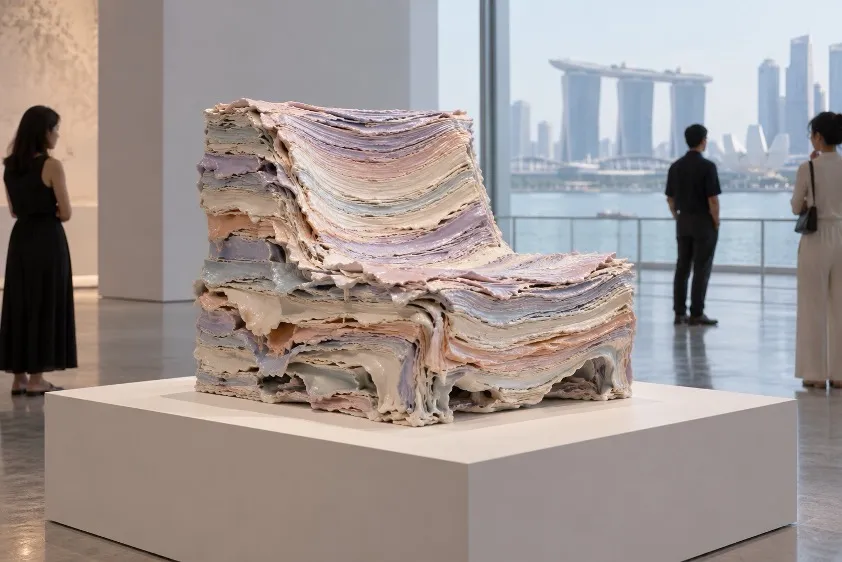
“The most compelling objects do not hide the process. They reveal what happens when materials take the lead.”
Already have an account?
FUTURISTS CLUB EXECUTIVE INTELLIGENCE
MEMBER EXCLUSIVE
The Rest of This Strategic Briefing is Reserved for Members
Join an international network of senior innovators, decision-makers, and hospitality leaders. Unlock all defining micro-signals, full field research, and the Monthly Foresight Briefing.
Member Access Sign In
Enter the email address associated with your Futurists Club membership. We will send you an instant one-click login link.
30 comments
HOW COOL IS THIS “SEED”? ● ● ● ● ●
DOES IT HAVE FUTURE GROWTH POTENTIAL? ● ● ● ● ○
I like how the finished form keeps the uncertainty of making visible. A hotel displaying this work could open a discussion about skill and patience. The artist’s process deserves space in that discussion, rather than being reduced to an attractive lobby backdrop.
There is a lovely invitation here to reconsider what control means. Visitors recognise a chair, then discover something they cannot quite classify. A guided studio encounter could deepen that curiosity, provided it does not promise a repeatable version of the artist’s result.
The signal is the willingness to pay attention to a process whose outcome remains partly uncertain. That feels relevant to luxury’s search for meaningful distinction. I would keep the growth claim modest: one prize-winning object opens a possibility rather than establishing broad demand.
How the work is introduced could change the entire encounter. Staff who explain the paper burning away give guests a reason to move closer. They also need to make clear that the seat-like shape is an artwork, especially in a busy public space.
The familiar shape draws me in, but the uneven layers are what hold my attention. There is something comforting about skilled work that allows a surprise to remain visible. I wonder whether viewers feel an urge to touch it or simply to look longer.
This would reward a host who knows when to stop talking. Explain the layers and the firing, then let the guest notice the details. A generous encounter with craft leaves room for the visitor’s own response rather than supplying every interpretation in advance.
A chair usually tells us how to use it immediately. Here that everyday certainty falls apart. I find that more interesting than the luxury prize: a common form becomes unfamiliar through material experimentation, giving people a fresh way to see an ordinary object.
The paper is temporary, but its presence still shapes what survives. That makes the work a useful conversation about material histories. I would want to understand the porcelain and firing process before calling it sustainable; visible transformation is not an environmental assessment.
This object asks for the kind of attention that cannot be rushed. Watching how the layers settle is part of its appeal. The commercial tension is whether collectors value that slow encounter enough to support work that resists easy repetition.
Owning this would communicate an interest in how an object came into being, not only who awarded it a prize. That could appeal to collectors building knowledge around contemporary craft. Documentation of the process would help the distinction survive beyond the first conversation.
In a resort, a piece like this needs a setting where guests can approach without feeling that they have entered a guarded showroom. Its dramatic form could work beautifully in a quiet art space. Everyday guest circulation would require much more careful planning.
The permission to leave some things unresolved is appealing in a culture that measures everything. Looking at the work might offer a reflective pause. I would describe that as an artistic experience, without turning a personal response into a wellness benefit.
A finished photograph misses the surprising part: the paper disappears during firing. A well-made process film could invite younger audiences into the work without asking them to understand ceramics first. The digital layer should reveal decisions, not manufacture an illusion of effortless making.
A process film would be especially useful if it also shows how much preparation precedes the firing. The unexpected result depends on careful conditions, not on leaving the whole outcome to chance.
There is an interesting parallel with cooking, where heat changes even a carefully prepared material. The maker sets the conditions and then responds to what happens. That shared language could make a craft encounter accessible to visitors who initially feel distant from sculpture.
The layered surface makes the kiln’s role readable in the finished object. That is what gives the work its particular character. For a collector, I would want photographs and notes that preserve the making history alongside guidance on caring for those delicate edges.
That documentation could invite people closer without making them feel they need specialist knowledge. I would like the display to leave room for a quiet, personal response as well.
The strongest experience may be understanding the transformation, rather than simply standing beside a celebrated object. A small demonstration of paper and porcelain slip could make that tangible. It should explain the technique without pretending that a visitor can reproduce the artwork.
This offers a thoughtful break from optimisation language: not every irregularity needs correcting. That is an engaging cultural idea, although it does not demonstrate anything about recovery or health. I would keep the artwork’s appeal rooted in attention, material and skilled making.
The rough surface rewards attention without needing a polished luxury finish. I appreciate that the maker’s choices remain visible. The quiet strength is in how little explanation the form needs to feel particular, even before a viewer learns about the prize.
The transformation from paper layers to ceramic gives people a story worth sharing. Still, a short clip may make the work look like a trick. Showing the slow preparation as well as the firing would preserve the skill that makes the surprise meaningful.
I am drawn to the fact that perfection is not the target. The piece keeps the awkwardness that mass-produced furniture usually removes. My question is whether collectors will stay interested in the artist’s experiments when the prize is no longer the main introduction.
The resemblance to a seat makes the work approachable, while the surface keeps it from becoming conventional furniture. That balance could give it lasting collectible interest. The artist’s developing body of work will matter more than treating one celebrated piece as a new luxury category.
A display could let visitors compare an image of the paper structure with the fired object. That would make the transformation easier to understand without covering the room in text. I would keep enough space around it for people to look from several angles.
What interests me is the emotional value of an outcome that was not completely predetermined. A brand discussing this work should resist turning controlled uncertainty into a slogan. Specific decisions about layering and firing are what make the idea credible.
An introduction to the making could add value to a hotel art encounter without turning it into a sales pitch. I would ask whether guests remember the process afterwards. Their curiosity could matter more than knowing the work has received a prize.
A visually unfamiliar work can give a hotel a cultural point of conversation. Staff need enough understanding to introduce it confidently, including why it should not be used as a chair. The experience works when curiosity and everyday guest circulation can coexist.
A ceramic work that resembles a seat can make people stop before they even know the artist’s name. That is useful for a hotel art programme. I would commission a conversation around the making rather than assume the prize alone will make guests care.
The kiln’s contribution gives a host something concrete to explain. Thousands of paper layers disappear, yet their structure survives in porcelain. A short, thoughtful introduction could help a guest look again without turning an encounter with art into a lecture.
The opportunity seems strongest in collecting and cultural programming, where an individual work can justify specialist attention. Scaling this into a hospitality product is a different proposition. Fragility, commissioning costs and conservation would matter as much as the powerful first impression.


30 comments
HOW COOL IS THIS “SEED”?
● ● ● ● ●
DOES IT HAVE FUTURE GROWTH POTENTIAL?
● ● ● ● ○
I like how the finished form keeps the uncertainty of making visible. A hotel displaying this work could open a discussion about skill and patience. The artist’s process deserves space in that discussion, rather than being reduced to an attractive lobby backdrop.
HOW COOL IS THIS “SEED”?
● ● ● ● ●
DOES IT HAVE FUTURE GROWTH POTENTIAL?
● ● ● ● ●
There is a lovely invitation here to reconsider what control means. Visitors recognise a chair, then discover something they cannot quite classify. A guided studio encounter could deepen that curiosity, provided it does not promise a repeatable version of the artist’s result.
HOW COOL IS THIS “SEED”?
● ● ● ● ●
DOES IT HAVE FUTURE GROWTH POTENTIAL?
● ● ● ● ●
The signal is the willingness to pay attention to a process whose outcome remains partly uncertain. That feels relevant to luxury’s search for meaningful distinction. I would keep the growth claim modest: one prize-winning object opens a possibility rather than establishing broad demand.
HOW COOL IS THIS “SEED”?
● ● ● ● ●
DOES IT HAVE FUTURE GROWTH POTENTIAL?
● ● ● ● ●
How the work is introduced could change the entire encounter. Staff who explain the paper burning away give guests a reason to move closer. They also need to make clear that the seat-like shape is an artwork, especially in a busy public space.
HOW COOL IS THIS “SEED”?
● ● ● ● ●
DOES IT HAVE FUTURE GROWTH POTENTIAL?
● ● ● ● ●
The familiar shape draws me in, but the uneven layers are what hold my attention. There is something comforting about skilled work that allows a surprise to remain visible. I wonder whether viewers feel an urge to touch it or simply to look longer.
HOW COOL IS THIS “SEED”?
● ● ● ● ●
DOES IT HAVE FUTURE GROWTH POTENTIAL?
● ● ● ● ●
This would reward a host who knows when to stop talking. Explain the layers and the firing, then let the guest notice the details. A generous encounter with craft leaves room for the visitor’s own response rather than supplying every interpretation in advance.
HOW COOL IS THIS “SEED”?
● ● ● ● ●
DOES IT HAVE FUTURE GROWTH POTENTIAL?
● ● ● ● ●
A chair usually tells us how to use it immediately. Here that everyday certainty falls apart. I find that more interesting than the luxury prize: a common form becomes unfamiliar through material experimentation, giving people a fresh way to see an ordinary object.
HOW COOL IS THIS “SEED”?
● ● ● ● ●
DOES IT HAVE FUTURE GROWTH POTENTIAL?
● ● ● ● ●
The paper is temporary, but its presence still shapes what survives. That makes the work a useful conversation about material histories. I would want to understand the porcelain and firing process before calling it sustainable; visible transformation is not an environmental assessment.
HOW COOL IS THIS “SEED”?
● ● ● ● ●
DOES IT HAVE FUTURE GROWTH POTENTIAL?
● ● ● ● ●
This object asks for the kind of attention that cannot be rushed. Watching how the layers settle is part of its appeal. The commercial tension is whether collectors value that slow encounter enough to support work that resists easy repetition.
HOW COOL IS THIS “SEED”?
● ● ● ● ●
DOES IT HAVE FUTURE GROWTH POTENTIAL?
● ● ● ● ●
Owning this would communicate an interest in how an object came into being, not only who awarded it a prize. That could appeal to collectors building knowledge around contemporary craft. Documentation of the process would help the distinction survive beyond the first conversation.
HOW COOL IS THIS “SEED”?
● ● ● ● ●
DOES IT HAVE FUTURE GROWTH POTENTIAL?
● ● ● ● ○
In a resort, a piece like this needs a setting where guests can approach without feeling that they have entered a guarded showroom. Its dramatic form could work beautifully in a quiet art space. Everyday guest circulation would require much more careful planning.
HOW COOL IS THIS “SEED”?
● ● ● ● ○
DOES IT HAVE FUTURE GROWTH POTENTIAL?
● ● ● ● ○
The permission to leave some things unresolved is appealing in a culture that measures everything. Looking at the work might offer a reflective pause. I would describe that as an artistic experience, without turning a personal response into a wellness benefit.
HOW COOL IS THIS “SEED”?
● ● ● ● ●
DOES IT HAVE FUTURE GROWTH POTENTIAL?
● ● ● ● ○
A finished photograph misses the surprising part: the paper disappears during firing. A well-made process film could invite younger audiences into the work without asking them to understand ceramics first. The digital layer should reveal decisions, not manufacture an illusion of effortless making.
A process film would be especially useful if it also shows how much preparation precedes the firing. The unexpected result depends on careful conditions, not on leaving the whole outcome to chance.
HOW COOL IS THIS “SEED”?
● ● ● ● ○
DOES IT HAVE FUTURE GROWTH POTENTIAL?
● ● ● ● ●
There is an interesting parallel with cooking, where heat changes even a carefully prepared material. The maker sets the conditions and then responds to what happens. That shared language could make a craft encounter accessible to visitors who initially feel distant from sculpture.
HOW COOL IS THIS “SEED”?
● ● ● ● ●
DOES IT HAVE FUTURE GROWTH POTENTIAL?
● ● ● ● ●
The layered surface makes the kiln’s role readable in the finished object. That is what gives the work its particular character. For a collector, I would want photographs and notes that preserve the making history alongside guidance on caring for those delicate edges.
That documentation could invite people closer without making them feel they need specialist knowledge. I would like the display to leave room for a quiet, personal response as well.
HOW COOL IS THIS “SEED”?
● ● ● ● ●
DOES IT HAVE FUTURE GROWTH POTENTIAL?
● ● ● ● ○
The strongest experience may be understanding the transformation, rather than simply standing beside a celebrated object. A small demonstration of paper and porcelain slip could make that tangible. It should explain the technique without pretending that a visitor can reproduce the artwork.
HOW COOL IS THIS “SEED”?
● ● ● ● ●
DOES IT HAVE FUTURE GROWTH POTENTIAL?
● ● ● ● ○
This offers a thoughtful break from optimisation language: not every irregularity needs correcting. That is an engaging cultural idea, although it does not demonstrate anything about recovery or health. I would keep the artwork’s appeal rooted in attention, material and skilled making.
HOW COOL IS THIS “SEED”?
● ● ● ● ●
DOES IT HAVE FUTURE GROWTH POTENTIAL?
● ● ● ● ●
The rough surface rewards attention without needing a polished luxury finish. I appreciate that the maker’s choices remain visible. The quiet strength is in how little explanation the form needs to feel particular, even before a viewer learns about the prize.
HOW COOL IS THIS “SEED”?
● ● ● ● ●
DOES IT HAVE FUTURE GROWTH POTENTIAL?
● ● ● ● ○
The transformation from paper layers to ceramic gives people a story worth sharing. Still, a short clip may make the work look like a trick. Showing the slow preparation as well as the firing would preserve the skill that makes the surprise meaningful.
HOW COOL IS THIS “SEED”?
● ● ● ● ○
DOES IT HAVE FUTURE GROWTH POTENTIAL?
● ● ● ● ○
I am drawn to the fact that perfection is not the target. The piece keeps the awkwardness that mass-produced furniture usually removes. My question is whether collectors will stay interested in the artist’s experiments when the prize is no longer the main introduction.
HOW COOL IS THIS “SEED”?
● ● ● ● ○
DOES IT HAVE FUTURE GROWTH POTENTIAL?
● ● ● ● ●
The resemblance to a seat makes the work approachable, while the surface keeps it from becoming conventional furniture. That balance could give it lasting collectible interest. The artist’s developing body of work will matter more than treating one celebrated piece as a new luxury category.
HOW COOL IS THIS “SEED”?
● ● ● ● ●
DOES IT HAVE FUTURE GROWTH POTENTIAL?
● ● ● ● ●
A display could let visitors compare an image of the paper structure with the fired object. That would make the transformation easier to understand without covering the room in text. I would keep enough space around it for people to look from several angles.
HOW COOL IS THIS “SEED”?
● ● ● ● ○
DOES IT HAVE FUTURE GROWTH POTENTIAL?
● ● ● ○ ○
What interests me is the emotional value of an outcome that was not completely predetermined. A brand discussing this work should resist turning controlled uncertainty into a slogan. Specific decisions about layering and firing are what make the idea credible.
HOW COOL IS THIS “SEED”?
● ● ● ● ●
DOES IT HAVE FUTURE GROWTH POTENTIAL?
● ● ● ● ○
An introduction to the making could add value to a hotel art encounter without turning it into a sales pitch. I would ask whether guests remember the process afterwards. Their curiosity could matter more than knowing the work has received a prize.
HOW COOL IS THIS “SEED”?
● ● ● ● ○
DOES IT HAVE FUTURE GROWTH POTENTIAL?
● ● ● ● ○
A visually unfamiliar work can give a hotel a cultural point of conversation. Staff need enough understanding to introduce it confidently, including why it should not be used as a chair. The experience works when curiosity and everyday guest circulation can coexist.
HOW COOL IS THIS “SEED”?
● ● ● ● ●
DOES IT HAVE FUTURE GROWTH POTENTIAL?
● ● ● ● ●
A ceramic work that resembles a seat can make people stop before they even know the artist’s name. That is useful for a hotel art programme. I would commission a conversation around the making rather than assume the prize alone will make guests care.
HOW COOL IS THIS “SEED”?
● ● ● ● ●
DOES IT HAVE FUTURE GROWTH POTENTIAL?
● ● ● ● ●
The kiln’s contribution gives a host something concrete to explain. Thousands of paper layers disappear, yet their structure survives in porcelain. A short, thoughtful introduction could help a guest look again without turning an encounter with art into a lecture.
HOW COOL IS THIS “SEED”?
● ● ● ● ●
DOES IT HAVE FUTURE GROWTH POTENTIAL?
● ● ● ● ●
The opportunity seems strongest in collecting and cultural programming, where an individual work can justify specialist attention. Scaling this into a hospitality product is a different proposition. Fragility, commissioning costs and conservation would matter as much as the powerful first impression.
Rate & Discuss this Signal
Calibrate the Future Signals Index with your rating below, and share your perspective in the community dialogue.
Evaluate this Creative Signal
Help calibrate the Future Signals Index. Rate this Seed on both key criteria below (scale: 2 to 10).