






“When a garment comes with its own history, buying it becomes a form of cultural literacy.”
Take Away
At Shanghai’s Suhe Haus, ARCHIVISM turned Phoebe Philo-era Céline into a shoppable exhibition. Instead of presenting each archival garment as anonymous resale stock, the team added context. Furthermore, Visitors could see runway images, collection references, look details, and material information. In addition, This made the retail experience feel more like a guided fashion story. Furthermore, Customers could buy the garment and learn why it matters.
Luxury retail is borrowing one of the museum’s strongest tools: context. Provenance, images, and design history can become part of the buying experience. Furthermore, As a result, knowledge can add value to the object.
The Sign
What Is It?
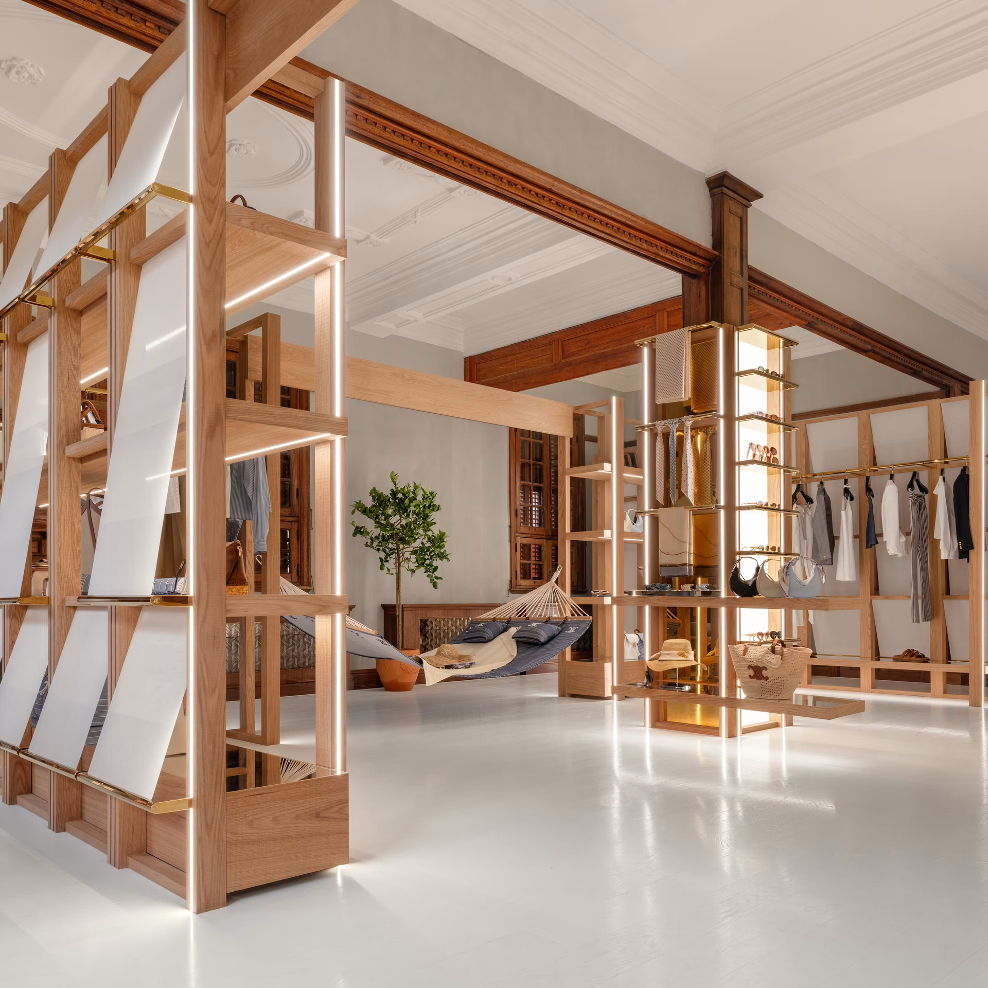
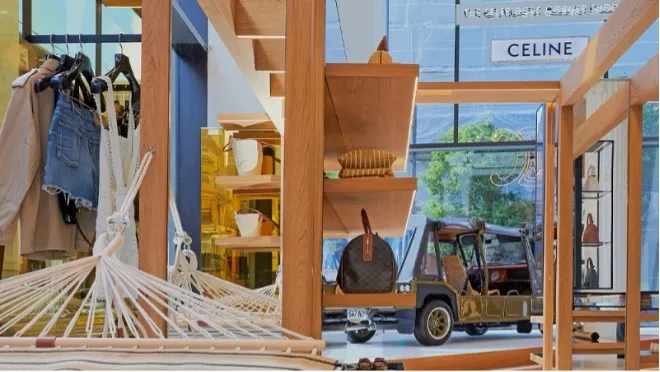
ARCHIVISM’s Collector’s Room presentation of Céline by Phoebe Philo ran from November 2025 to February 2026. Shanghai’s tourism listing describes it as a continuing curatorial project built from the archive, while System magazine reported around 800 pieces from 2010–18 and a research-led, shoppable display with books, catalogues, and campaign material.
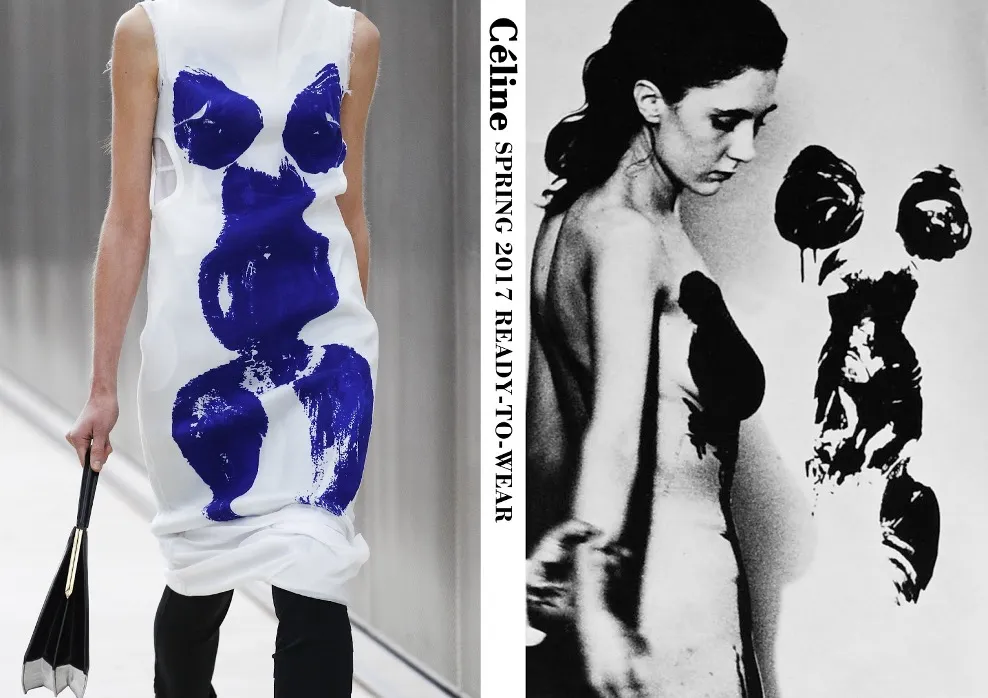
Examples included a blue Yves Klein-inspired dress and the brand’s familiar straw-wall visual language. Furthermore, The photographs document the exhibition method and visual world rather than proving every object’s individual history.
Why Is It Cool?
The cleverest object in the room may be the label itself. A standard resale tag answers the commercial question — what is it and what does it cost?
ARCHIVISM adds a cultural question: why does this particular garment matter? A runway image, collection reference, or material detail turns the shopper from a price-comparer into a reader of fashion history.
That changes the seller’s role. Furthermore, The retailer becomes part dealer, part interpreter, helping the customer recognize a design language that may be invisible without context. In addition, The pleasure is not simply owning something rare; it is being able to see the reference, remember the collection, and understand why the piece has endured.
There is also a productive tension at the heart of the model. Furthermore, The garments remain commercial stock, so the museum atmosphere does not remove the logic of selling — it can make desire more sophisticated.
The system’s reporting says paying clients skew older, in their forties and fifties, so this should not be presented as proven Gen Z buying behaviour. Furthermore, Younger viewers may nonetheless learn the visual language through exhibitions and social platforms before they can afford a piece.
Why Does It Have Future Growth Potential?
The growth opportunity is really about trust.
Secondhand luxury can feel anonymous: the buyer has to assess authenticity, condition, era, and relevance, often from a single product photograph. A documented archive changes that equation. Furthermore, It gives the customer reasons to believe that a piece belongs to a particular moment in design history, and gives sales associates a richer conversation than price and condition alone.
It also suggests a future for physical retail in which the store does something the marketplace cannot easily reproduce. Furthermore, An exhibition can create desire before a purchase decision is made, teach a visual language, and give an object social meaning. In addition, The commercial journey may continue online, although this source does not disclose a conversion path.
The model is not easily scaled.
Sourcing, authentication, conservation, research and teaching all require specialists, while the strongest archival pieces are scarce. Furthermore, Simply adding museum labels would miss the point.
The more durable opportunity is a retailer that earns authority by explaining what an object is, where it belongs in a larger story, and why its details matter.
30 comments
HOW COOL IS THIS “SEED”?
● ● ● ● ●
DOES IT HAVE FUTURE GROWTH POTENTIAL?
● ● ● ● ●
A digital catalogue could preserve the research when a garment sells and continue the learning outside the room. It should show which evidence supports each claim. The online extension would be most useful if it retained the detail rather than becoming a stream of desirability images.
HOW COOL IS THIS “SEED”?
● ● ● ● ○
DOES IT HAVE FUTURE GROWTH POTENTIAL?
● ● ● ● ●
The labels work like a good menu note that explains an unfamiliar ingredient without dictating the response. The visitor can decide how deeply to engage. Knowledge should enrich the choice, not make someone feel they must demonstrate expertise before enjoying the object.
HOW COOL IS THIS “SEED”?
● ● ● ● ○
DOES IT HAVE FUTURE GROWTH POTENTIAL?
● ● ● ● ●
Material details help an archival garment be understood as an object with construction and wear, not only as an image. Condition records would deepen that value. I would like the display to make the relationship between handling, conservation and eventual use clear.
HOW COOL IS THIS “SEED”?
● ● ● ● ●
DOES IT HAVE FUTURE GROWTH POTENTIAL?
● ● ● ● ●
A guided encounter with a few pieces could be memorable even for someone who never buys one. That is a real experiential role for retail. The commercial invitation should remain transparent so the visitor understands when interpretation becomes a sales conversation.
HOW COOL IS THIS “SEED”?
● ● ● ● ●
DOES IT HAVE FUTURE GROWTH POTENTIAL?
● ● ● ● ○
A garment’s cultural relevance does not answer every practical question about wearing it. Fit, condition and comfort still deserve attention. The exhibition method should help a buyer ask those questions, rather than make the piece feel too important to examine properly.
HOW COOL IS THIS “SEED”?
● ● ● ● ○
DOES IT HAVE FUTURE GROWTH POTENTIAL?
● ● ● ● ●
The appeal is in learning to notice a design detail rather than buying louder recognition. That feels well suited to quiet luxury. I would keep the room restrained enough that the garments, references and material differences remain easier to see than the curatorial styling.
HOW COOL IS THIS “SEED”?
● ● ● ● ●
DOES IT HAVE FUTURE GROWTH POTENTIAL?
● ● ● ● ●
Younger viewers may learn the visual language before becoming customers. That is interesting, but different from established purchasing demand. I would follow how knowledge circulates through their conversations while keeping the reported older paying clientele visible in the commercial analysis.
HOW COOL IS THIS “SEED”?
● ● ● ● ●
DOES IT HAVE FUTURE GROWTH POTENTIAL?
● ● ● ● ○
The archive may encourage people to value an enduring design language over a current drop. That is promising. There is still a tension when educational authority becomes a way to sell scarcity; the store should be comfortable making its commercial role explicit.
HOW COOL IS THIS “SEED”?
● ● ● ● ●
DOES IT HAVE FUTURE GROWTH POTENTIAL?
● ● ● ● ●
Runway images and collection references give the garment a place within an atelier’s developing language. That can be valuable to a buyer. I would resist presenting every archival piece as equally important; careful judgement should include why some designs endured more strongly than others.
HOW COOL IS THIS “SEED”?
● ● ● ● ●
DOES IT HAVE FUTURE GROWTH POTENTIAL?
● ● ● ● ●
The label changes the store’s task from displaying stock to helping a visitor see. Layout and sightlines should support comparison between garment and reference. The exhibition also needs a clear way to change as pieces sell without losing its explanatory coherence.
HOW COOL IS THIS “SEED”?
● ● ● ● ○
DOES IT HAVE FUTURE GROWTH POTENTIAL?
● ● ● ● ○
Knowledge builds trust when the visitor can inspect it and ask questions. That is the opportunity here. A warm experience should make the evidence more accessible, with the distinction between curatorial interpretation and documented facts kept clear throughout the sale.
HOW COOL IS THIS “SEED”?
● ● ● ● ●
DOES IT HAVE FUTURE GROWTH POTENTIAL?
● ● ● ● ●
Context can help a customer appreciate a garment, but it should also make the purchase easier to judge. I would ask whether the information answers practical questions about condition and care. Expertise creates value when it builds confidence rather than merely a higher price.
HOW COOL IS THIS “SEED”?
● ● ● ● ●
DOES IT HAVE FUTURE GROWTH POTENTIAL?
● ● ● ● ●
The combination of display and selling could make a space feel culturally inviting or intimidating. I would watch how first-time visitors behave. A clear explanation that they may browse and ask ordinary questions could be as important as the labels themselves.
HOW COOL IS THIS “SEED”?
● ● ● ● ●
DOES IT HAVE FUTURE GROWTH POTENTIAL?
● ● ● ● ●
A shoppable exhibition gives physical retail a reason to be visited beyond checking stock. Research and explanation can support trust, but they cost time. I would assess learning visits and purchases separately instead of treating every curious visitor as an immediate buyer.
HOW COOL IS THIS “SEED”?
● ● ● ● ○
DOES IT HAVE FUTURE GROWTH POTENTIAL?
● ● ● ● ○
A sales associate who can explain a runway reference has a richer conversation available than price alone. The skill is judging how much the visitor wants to know. A welcoming store should remain comfortable for someone who simply likes the garment’s shape.
HOW COOL IS THIS “SEED”?
● ● ● ● ●
DOES IT HAVE FUTURE GROWTH POTENTIAL?
● ● ● ● ○
The archive combines scarce stock with specialist research and conservation. Those costs make easy expansion unlikely. I would look at the margins and replacement process when important pieces sell, rather than assume the museum atmosphere itself creates a sustainable business.
HOW COOL IS THIS “SEED”?
● ● ● ● ●
DOES IT HAVE FUTURE GROWTH POTENTIAL?
● ● ● ● ○
The exhibition can help visitors recognise a design language that a resale rack leaves unexplained. That educational value deserves attention even when no purchase follows. Keeping a record after garments sell would allow the cultural work to continue beyond the transaction.
HOW COOL IS THIS “SEED”?
● ● ● ● ●
DOES IT HAVE FUTURE GROWTH POTENTIAL?
● ● ● ● ○
Context gives the shopper a role as a reader rather than only a customer. I like that invitation. The labels should be clear about whether they explain a collection or document the particular garment, because those offer different kinds of knowledge.
HOW COOL IS THIS “SEED”?
● ● ● ● ●
DOES IT HAVE FUTURE GROWTH POTENTIAL?
● ● ● ● ●
This is a useful signal of retail earning authority through explanation. I would avoid turning the younger audience into a buying claim: the article distinguishes viewers from older paying clients. Cultural visibility and commercial demand deserve separate evidence.
Separating cultural attention from purchasing would strengthen the analysis. A younger audience can learn the design language without that becoming evidence that it already supports the store commercially.
HOW COOL IS THIS “SEED”?
● ● ● ● ●
DOES IT HAVE FUTURE GROWTH POTENTIAL?
● ● ● ● ●
A visitor should be able to ask a basic question without feeling that the display is testing their fashion knowledge. The team’s tone matters as much as the labels. A thoughtful answer can make an archival piece approachable while preserving its complexity.
HOW COOL IS THIS “SEED”?
● ● ● ● ●
DOES IT HAVE FUTURE GROWTH POTENTIAL?
● ● ● ● ●
Seeing the garment beside an image of its earlier presentation could change what someone notices. A detail that seemed ordinary may suddenly feel intentional. I wonder whether visitors leave wanting to buy a piece or simply feeling more confident in their own eye.
HOW COOL IS THIS “SEED”?
● ● ● ● ●
DOES IT HAVE FUTURE GROWTH POTENTIAL?
● ● ● ● ●
Staff need to distinguish the garment’s condition from the collection’s cultural story. A beautiful explanation should not make practical questions harder to ask. Visitors deserve the same patient attention whether they are checking seams, learning a reference or deciding not to purchase.
HOW COOL IS THIS “SEED”?
● ● ● ● ●
DOES IT HAVE FUTURE GROWTH POTENTIAL?
● ● ● ● ●
The museum label is an interesting tool, but it also brings institutional authority into a commercial room. I would ask whose interpretation becomes visible. Fashion history can be richer when the wearer and wider culture have a place beside the celebrated designer.
HOW COOL IS THIS “SEED”?
● ● ● ● ●
DOES IT HAVE FUTURE GROWTH POTENTIAL?
● ● ● ● ○
Collection references help explain design context, while individual provenance addresses the specific object. I would keep those records distinct. An exhibition photograph can demonstrate the display method without proving where every garment has been or how it has been cared for.
The distinction could be visible on the label itself: collection context, individual condition and verified object history. That would keep the display welcoming while making its claims easier to examine.
HOW COOL IS THIS “SEED”?
● ● ● ● ●
DOES IT HAVE FUTURE GROWTH POTENTIAL?
● ● ● ● ●
Research can save a buyer hours of trying to understand an archival garment from scattered images. That is a valuable service when the evidence is accessible. A concise record the customer can keep would make the explanation useful beyond the visit.
HOW COOL IS THIS “SEED”?
● ● ● ● ●
DOES IT HAVE FUTURE GROWTH POTENTIAL?
● ● ● ● ○
Knowing the reference behind a garment creates a quieter form of distinction than recognising a logo. The label helps make that knowledge available. The strongest status proposition would encourage curiosity rather than turn the archive into another gatekeeping test of insider taste.
HOW COOL IS THIS “SEED”?
● ● ● ● ●
DOES IT HAVE FUTURE GROWTH POTENTIAL?
● ● ● ● ○
A hotel retail space could learn from the exhibition’s careful context, especially when presenting local design. It would need real expertise and a focused collection. Simply adding museum-style labels to merchandise would borrow the appearance of authority without earning it.
HOW COOL IS THIS “SEED”?
● ● ● ● ●
DOES IT HAVE FUTURE GROWTH POTENTIAL?
● ● ● ● ○
The pleasure of looking closely can make a visit feel unhurried, but that does not need a wellness explanation. I would value a store where learning is allowed without purchase pressure. Guests should be able to enjoy the setting on their own terms.
Rate & Discuss this Signal
Calibrate the Future Signals Index with your rating below, and share your perspective in the community dialogue.
Evaluate this Creative Signal
Help calibrate the Future Signals Index. Rate this Seed on both key criteria below (scale: 2 to 10).