FUTURISTS CLUB EXECUTIVE INTELLIGENCE
MEMBER EXCLUSIVE
The Rest of This Strategic Briefing is Reserved for Members
Join an international network of senior innovators, decision-makers, and hospitality leaders. Unlock all defining micro-signals, full field research, and the Monthly Foresight Briefing.
Een analoog meesterwerk van Gerd A. Müller (1966) dat de tegenbeweging naar tastbare focus, minimalistisch vakmanschap en diepgaande reflectie belichaamt.
Verbindt met de third-wave gastronomie en belevingsrituelen waarbij bereiding verandert in een esthetische theaterervaring.
As an Amazon Associate, Science of the Time earns from qualifying purchases. StoreID: scienceofthet-21
31 comments
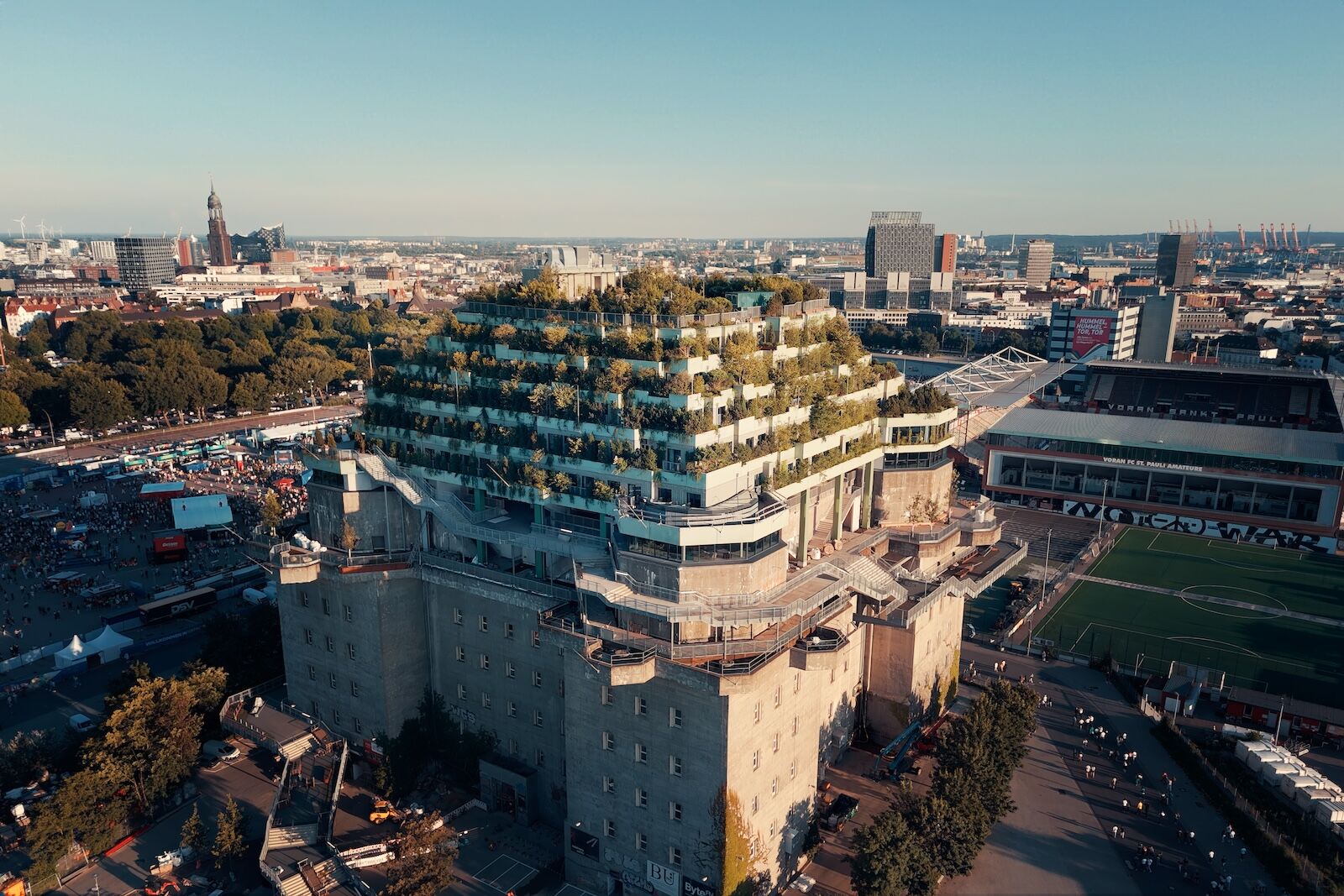
A powerful example of adaptive reuse becoming emotional rather than merely architectural. The bunker’s difficult history is not erased, yet the building is given a radically different social purpose. The key question is how hospitality can honour memory while still creating optimism, energy and genuine local value.
The visit offers a sequence of very different encounters within one landmark. Guests should have freedom to choose their pace and route. The experience is stronger when people can spend time with what interests them, rather than be moved through a fixed series of impressive viewpoints.
A planted public space can be pleasant without supporting a specific health claim. Practical comfort remains important: places to pause, clear routes and considerate access. The project’s emotional language should not replace an assessment of whether visitors with different needs can use the setting comfortably.
The existing mass and materials give the building character without needing a new decorative story on every surface. Restraint would help its history remain readable. The conversion should let people encounter the structure, rather than smooth every difficult trace into a polished hotel image.
A powerful transformation image can attract attention quickly. The visit needs to reveal more than the contrast in a photograph. Clear historical context and visitors’ accounts of ordinary use will help the story remain meaningful after the architectural spectacle becomes familiar.
A new cultural role should not turn the building’s past into an exciting brand origin. The local relationship and historical account need independent seriousness. I would ask who helps interpret the site and whether the commercial programme leaves room for uncomfortable questions.
A historical account should have authority beyond the brand’s promotional narrative. That gives visitors room to understand the site even when their response is more complicated than admiration for the transformation.
An existing landmark gives the hotel a form of distinction that cannot be reproduced by choosing similar finishes. That authority also carries responsibility. The project should preserve the specificity of the place instead of using its history mainly to confer prestige on a new hospitality brand.
The emotional value comes from a place acquiring a generous new role while its past remains acknowledged. Hospitality can help people meet and reflect there. The relationship becomes more credible when local use and thoughtful interpretation are sustained as carefully as the hotel’s guest experience.
This has the kind of visual identity that cannot be invented through branding alone. The bunker, rooftop park and music culture give visitors several stories to discover and share. Its strongest commercial advantage is authenticity, but communication must resist turning painful history into a dramatic backdrop for content.
There is something moving about a fortress becoming a place of welcome, music and public greenery. The real hospitality challenge is in the conversations staff have with guests: they must hold both the weight of the history and the energy of the new experience. That calls for sensitivity, not a script.
No new hotel could reproduce this building’s physical weight, history or place in Hamburg’s memory. That makes it rare in a meaningful way. The value lies in careful stewardship: access to the site should deepen respect for its provenance, not reduce it to an unusual room category.
A Nazi-era bunker becoming a rooftop park, music venue and hotel is full of cultural friction. St. Pauli’s energy matters here; the building is not isolated from the neighbourhood. I would watch whether local communities truly use the space, because that will decide if the transformation feels alive or merely branded.
The building gives guests reasons to visit beyond an overnight stay. Each offer still needs to work on its own terms. A compelling history may bring people through the door, while thoughtful service determines whether the restaurant, event or hotel becomes part of their routine.
Visitors may arrive with very different knowledge of the building’s past. The welcome should make historical context accessible without turning it into a dramatic sales script. Clear interpretation and practical orientation can help guests engage with the place respectfully.
A distinctive landmark can shape the appeal of a destination, but ordinary operation sustains that attention. I would assess local visits and overnight demand separately. The cultural story should support a viable offer rather than be expected to compensate for inconsistent service.
The place already carries meaning before the hotel enters it. Staff can help visitors notice that history while enjoying its new uses. The challenge is to make hospitality welcoming without treating a complicated past as an unusual amenity added to the stay.
Reusing a substantial structure can be compelling, though conversion has its own technical and financial demands. This example should not be assumed easy to replicate. Each building requires a feasibility assessment that includes maintenance, access and the cost of keeping shared spaces genuinely usable.
Public access gives the transformation meaning beyond the hotel guest. I would ask how local people use the spaces and influence their programme. A cultural platform becomes credible when its relationship with the neighbourhood continues after the initial architectural attention has passed.
Public access also needs legible routes and a welcoming threshold. A shared space may exist on paper while still feeling like somewhere only hotel guests are expected to enter.
The building’s new life can bring people together while leaving its difficult history visible. Interpretation needs room for reflection rather than only a story of triumphant transformation. Visitors should be able to understand what happened here without being pushed immediately into celebrating the new experience.
Guests may move from a reflective encounter to a lively public setting during one visit. Staff need sensitivity to that change of mood. A warm welcome should not require treating remembrance and entertainment as if they were emotionally interchangeable parts of the programme.
There is emotional weight in seeing a place associated with conflict become somewhere people meet. The new use should not erase what makes the building difficult to understand. Quiet spaces for reflection can sit alongside everyday enjoyment without forcing either experience into a single reassuring story.
Employees need confidence in answering basic historical questions and knowing when to direct visitors to better information. They should not have to improvise a sensitive account during service. Good preparation lets the team remain welcoming while acknowledging the limits of their own knowledge.
Several activities in one place can help visitors make a meaningful short visit. Navigation should remain clear, especially where public and guest spaces overlap. The building’s complexity ought not to consume the time people hoped to spend enjoying or understanding it.
Access to a distinctive landmark can become a status experience, while public use offers a different value. I would be interested in the balance between them. The transformation feels more meaningful when the place remains part of city life rather than primarily a prestigious address to collect.
The dramatic structure gives the hotel a world that could not be invented from scratch. Comfort still deserves careful attention within that setting. Guests should be able to enjoy its character without accepting practical inconvenience as the unavoidable price of staying somewhere architecturally remarkable.
Green space may offer visitors a welcome pause, but the article’s broader sustainability and sanctuary language needs careful interpretation. The experience can be enjoyable without promising recovery. I would ask how different visitors actually use the quieter parts of the building.
A digital guide could help people explore the history and navigate at their own pace. It should remain an optional layer beside clear physical information. The site becomes more accessible when visitors can understand it without keeping their attention fixed on a screen.
Dining can help the transformed building enter ordinary local life. The restaurant should have a reason to matter beyond its unusual address. Food and service can connect visitors to the neighbourhood, while the historic setting contributes context rather than supply the entire sense of authenticity.
Old and new materials can help the building’s different periods remain legible. I would look for repairs and additions that acknowledge those layers. An interior should not make every trace decorative, especially where the physical fabric carries meaning beyond its visual appeal.






31 comments
A powerful example of adaptive reuse becoming emotional rather than merely architectural. The bunker’s difficult history is not erased, yet the building is given a radically different social purpose. The key question is how hospitality can honour memory while still creating optimism, energy and genuine local value.
HOW COOL IS THIS “SEED”?
● ● ● ● ●
DOES IT HAVE FUTURE GROWTH POTENTIAL?
● ● ● ● ○
The visit offers a sequence of very different encounters within one landmark. Guests should have freedom to choose their pace and route. The experience is stronger when people can spend time with what interests them, rather than be moved through a fixed series of impressive viewpoints.
HOW COOL IS THIS “SEED”?
● ● ● ○ ○
DOES IT HAVE FUTURE GROWTH POTENTIAL?
● ● ● ○ ○
A planted public space can be pleasant without supporting a specific health claim. Practical comfort remains important: places to pause, clear routes and considerate access. The project’s emotional language should not replace an assessment of whether visitors with different needs can use the setting comfortably.
HOW COOL IS THIS “SEED”?
● ● ● ● ●
DOES IT HAVE FUTURE GROWTH POTENTIAL?
● ● ● ● ○
The existing mass and materials give the building character without needing a new decorative story on every surface. Restraint would help its history remain readable. The conversion should let people encounter the structure, rather than smooth every difficult trace into a polished hotel image.
HOW COOL IS THIS “SEED”?
● ● ● ● ○
DOES IT HAVE FUTURE GROWTH POTENTIAL?
● ● ● ● ○
A powerful transformation image can attract attention quickly. The visit needs to reveal more than the contrast in a photograph. Clear historical context and visitors’ accounts of ordinary use will help the story remain meaningful after the architectural spectacle becomes familiar.
HOW COOL IS THIS “SEED”?
● ● ● ● ●
DOES IT HAVE FUTURE GROWTH POTENTIAL?
● ● ● ● ○
A new cultural role should not turn the building’s past into an exciting brand origin. The local relationship and historical account need independent seriousness. I would ask who helps interpret the site and whether the commercial programme leaves room for uncomfortable questions.
A historical account should have authority beyond the brand’s promotional narrative. That gives visitors room to understand the site even when their response is more complicated than admiration for the transformation.
HOW COOL IS THIS “SEED”?
● ● ● ● ○
DOES IT HAVE FUTURE GROWTH POTENTIAL?
● ● ● ● ○
An existing landmark gives the hotel a form of distinction that cannot be reproduced by choosing similar finishes. That authority also carries responsibility. The project should preserve the specificity of the place instead of using its history mainly to confer prestige on a new hospitality brand.
HOW COOL IS THIS “SEED”?
● ● ● ● ●
DOES IT HAVE FUTURE GROWTH POTENTIAL?
● ● ● ● ○
The emotional value comes from a place acquiring a generous new role while its past remains acknowledged. Hospitality can help people meet and reflect there. The relationship becomes more credible when local use and thoughtful interpretation are sustained as carefully as the hotel’s guest experience.
This has the kind of visual identity that cannot be invented through branding alone. The bunker, rooftop park and music culture give visitors several stories to discover and share. Its strongest commercial advantage is authenticity, but communication must resist turning painful history into a dramatic backdrop for content.
There is something moving about a fortress becoming a place of welcome, music and public greenery. The real hospitality challenge is in the conversations staff have with guests: they must hold both the weight of the history and the energy of the new experience. That calls for sensitivity, not a script.
No new hotel could reproduce this building’s physical weight, history or place in Hamburg’s memory. That makes it rare in a meaningful way. The value lies in careful stewardship: access to the site should deepen respect for its provenance, not reduce it to an unusual room category.
A Nazi-era bunker becoming a rooftop park, music venue and hotel is full of cultural friction. St. Pauli’s energy matters here; the building is not isolated from the neighbourhood. I would watch whether local communities truly use the space, because that will decide if the transformation feels alive or merely branded.
HOW COOL IS THIS “SEED”?
● ● ● ● ●
DOES IT HAVE FUTURE GROWTH POTENTIAL?
● ● ● ● ○
The building gives guests reasons to visit beyond an overnight stay. Each offer still needs to work on its own terms. A compelling history may bring people through the door, while thoughtful service determines whether the restaurant, event or hotel becomes part of their routine.
HOW COOL IS THIS “SEED”?
● ● ● ● ○
DOES IT HAVE FUTURE GROWTH POTENTIAL?
● ● ● ● ○
Visitors may arrive with very different knowledge of the building’s past. The welcome should make historical context accessible without turning it into a dramatic sales script. Clear interpretation and practical orientation can help guests engage with the place respectfully.
HOW COOL IS THIS “SEED”?
● ● ● ● ●
DOES IT HAVE FUTURE GROWTH POTENTIAL?
● ● ● ● ○
A distinctive landmark can shape the appeal of a destination, but ordinary operation sustains that attention. I would assess local visits and overnight demand separately. The cultural story should support a viable offer rather than be expected to compensate for inconsistent service.
HOW COOL IS THIS “SEED”?
● ● ● ● ●
DOES IT HAVE FUTURE GROWTH POTENTIAL?
● ● ● ● ○
The place already carries meaning before the hotel enters it. Staff can help visitors notice that history while enjoying its new uses. The challenge is to make hospitality welcoming without treating a complicated past as an unusual amenity added to the stay.
HOW COOL IS THIS “SEED”?
● ● ● ● ○
DOES IT HAVE FUTURE GROWTH POTENTIAL?
● ● ● ○ ○
Reusing a substantial structure can be compelling, though conversion has its own technical and financial demands. This example should not be assumed easy to replicate. Each building requires a feasibility assessment that includes maintenance, access and the cost of keeping shared spaces genuinely usable.
HOW COOL IS THIS “SEED”?
● ● ● ● ●
DOES IT HAVE FUTURE GROWTH POTENTIAL?
● ● ● ● ○
Public access gives the transformation meaning beyond the hotel guest. I would ask how local people use the spaces and influence their programme. A cultural platform becomes credible when its relationship with the neighbourhood continues after the initial architectural attention has passed.
Public access also needs legible routes and a welcoming threshold. A shared space may exist on paper while still feeling like somewhere only hotel guests are expected to enter.
HOW COOL IS THIS “SEED”?
● ● ● ● ●
DOES IT HAVE FUTURE GROWTH POTENTIAL?
● ● ● ● ○
The building’s new life can bring people together while leaving its difficult history visible. Interpretation needs room for reflection rather than only a story of triumphant transformation. Visitors should be able to understand what happened here without being pushed immediately into celebrating the new experience.
HOW COOL IS THIS “SEED”?
● ● ● ● ○
DOES IT HAVE FUTURE GROWTH POTENTIAL?
● ● ● ● ○
Guests may move from a reflective encounter to a lively public setting during one visit. Staff need sensitivity to that change of mood. A warm welcome should not require treating remembrance and entertainment as if they were emotionally interchangeable parts of the programme.
HOW COOL IS THIS “SEED”?
● ● ● ● ●
DOES IT HAVE FUTURE GROWTH POTENTIAL?
● ● ● ● ○
There is emotional weight in seeing a place associated with conflict become somewhere people meet. The new use should not erase what makes the building difficult to understand. Quiet spaces for reflection can sit alongside everyday enjoyment without forcing either experience into a single reassuring story.
HOW COOL IS THIS “SEED”?
● ● ● ● ○
DOES IT HAVE FUTURE GROWTH POTENTIAL?
● ● ● ● ○
Employees need confidence in answering basic historical questions and knowing when to direct visitors to better information. They should not have to improvise a sensitive account during service. Good preparation lets the team remain welcoming while acknowledging the limits of their own knowledge.
HOW COOL IS THIS “SEED”?
● ● ● ● ○
DOES IT HAVE FUTURE GROWTH POTENTIAL?
● ● ● ● ○
Several activities in one place can help visitors make a meaningful short visit. Navigation should remain clear, especially where public and guest spaces overlap. The building’s complexity ought not to consume the time people hoped to spend enjoying or understanding it.
HOW COOL IS THIS “SEED”?
● ● ● ● ○
DOES IT HAVE FUTURE GROWTH POTENTIAL?
● ● ● ● ○
Access to a distinctive landmark can become a status experience, while public use offers a different value. I would be interested in the balance between them. The transformation feels more meaningful when the place remains part of city life rather than primarily a prestigious address to collect.
HOW COOL IS THIS “SEED”?
● ● ● ● ●
DOES IT HAVE FUTURE GROWTH POTENTIAL?
● ● ● ● ○
The dramatic structure gives the hotel a world that could not be invented from scratch. Comfort still deserves careful attention within that setting. Guests should be able to enjoy its character without accepting practical inconvenience as the unavoidable price of staying somewhere architecturally remarkable.
HOW COOL IS THIS “SEED”?
● ● ● ● ○
DOES IT HAVE FUTURE GROWTH POTENTIAL?
● ● ● ○ ○
Green space may offer visitors a welcome pause, but the article’s broader sustainability and sanctuary language needs careful interpretation. The experience can be enjoyable without promising recovery. I would ask how different visitors actually use the quieter parts of the building.
HOW COOL IS THIS “SEED”?
● ● ● ● ○
DOES IT HAVE FUTURE GROWTH POTENTIAL?
● ● ● ● ○
A digital guide could help people explore the history and navigate at their own pace. It should remain an optional layer beside clear physical information. The site becomes more accessible when visitors can understand it without keeping their attention fixed on a screen.
HOW COOL IS THIS “SEED”?
● ● ● ● ○
DOES IT HAVE FUTURE GROWTH POTENTIAL?
● ● ● ● ○
Dining can help the transformed building enter ordinary local life. The restaurant should have a reason to matter beyond its unusual address. Food and service can connect visitors to the neighbourhood, while the historic setting contributes context rather than supply the entire sense of authenticity.
HOW COOL IS THIS “SEED”?
● ● ● ● ●
DOES IT HAVE FUTURE GROWTH POTENTIAL?
● ● ● ● ○
Old and new materials can help the building’s different periods remain legible. I would look for repairs and additions that acknowledge those layers. An interior should not make every trace decorative, especially where the physical fabric carries meaning beyond its visual appeal.
Rate & Discuss this Signal
Calibrate the Future Signals Index with your rating below, and share your perspective in the community dialogue.
Evaluate this Creative Signal
Help calibrate the Future Signals Index. Rate this Seed on both key criteria below (scale: 2 to 10).